Expert Review & Guide

Best Laptops for Streaming 2026: Encode, Thermals & Webcam

Streaming in 2026 means two overlapping jobs on one chassis: keeping a local encode path honest while your browser, chat tools, and camera stay live—and, for many households, simply playing 1080p video without the fans screaming or the timeline stuttering. The machines that win are not always the flashiest gaming shells. They are the ones that pair a usable encoder (NVENC, AMF, or a quiet CPU fallback), enough RAM to keep OBS or a stack of tabs from thrashing, a webcam you would not mind showing clients, and thermals that do not collapse after twenty minutes of sustained load.

This roundup ranks ten Amazon-listed laptops from our current pack only. We weight encode and GPU behavior first, then thermals under long sessions, then webcam usefulness for face-cam or calls, then RAM reality—because 4GB and 8GB configurations still ship next to 32GB creator builds, and those gaps matter more than marketing refresh rates when you are live. You will see a discrete RTX 4050 Nitro beside Radeon 780M NIMO creators, a Chromebook for light binge-and-meet days, and honest entry Windows boards that are fine for Netflix but weak for dual-PC dreams.

Ratings and feature strings follow the listed configurations. No invented ASINs, no dollar prices. If a title implies thin entry hardware, we say so. Match your workflow—watch-only, hybrid work-from-home streams, or game-plus-OBS—then use the comparison table and deep reviews to pick the right thermal and memory envelope.

Top streaming laptop picks for encode, camera, and RAM headroom

Best Overall Stream Rig

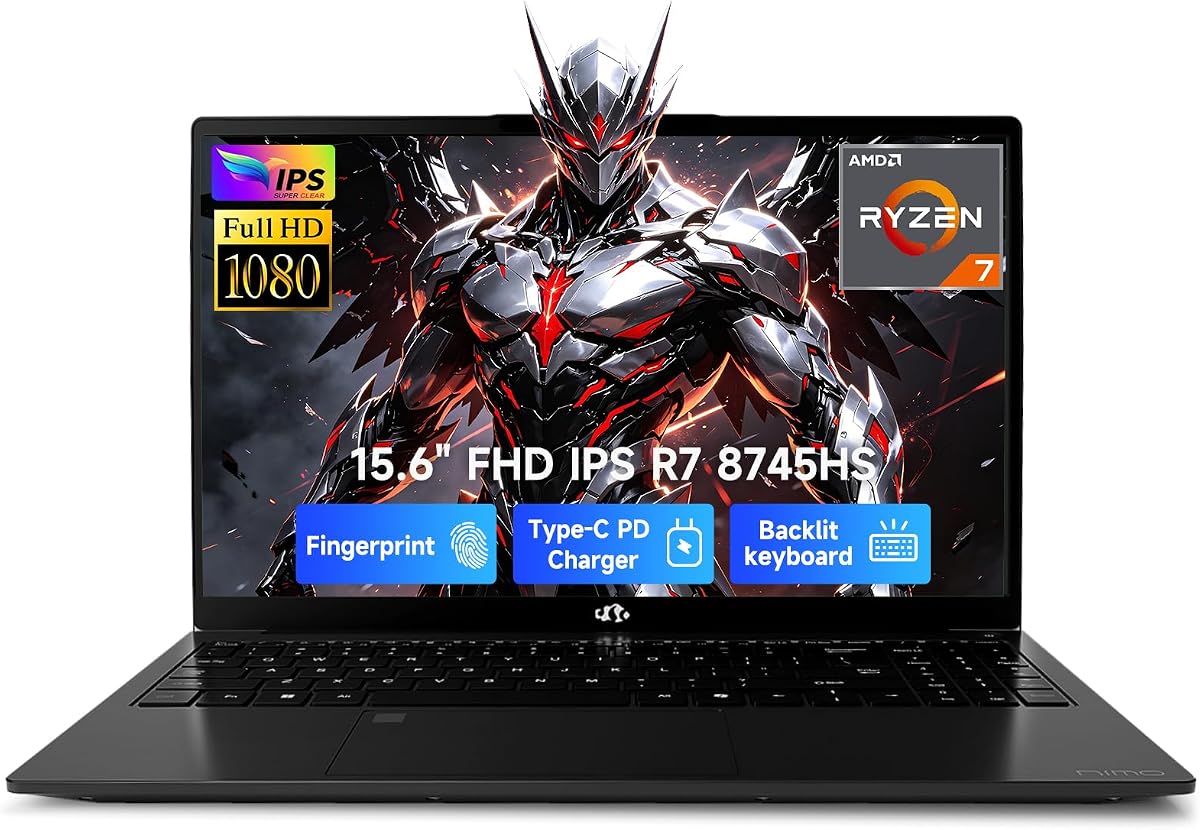
NIMO 15.6 Gaming-Creator-Laptop

★★★★★9.2/10
NIMO 15.6 Gaming-Creator-Laptop
  • Ryzen 7 8745HS with Radeon 780M AMF encode for 1080p live without a discrete card
  • 32GB DDR5 keeps OBS, browser sources, and chat tools from memory-starving mid-stream
  • 100W PD charging and upgradeable RAM/SSD path for growing creator workloads
Check Price →
Best Webcam Desk Streamer

HP OmniBook 3 17.3 inch Laptop PC

★★★★★9/10
HP OmniBook 3 17.3 inch Laptop PC
  • FHD camera with HDR auto-switch for clearer face-cam under mixed lighting
  • Advanced AI noise reduction keeps voice clean when room fans or housemates compete
  • 17.3" FHD IPS canvas plus Radeon 610M for big-screen binge and light multitask streams
Check Price →

As an Amazon Associate we earn from qualifying purchases. We may earn a commission at no additional cost to you.

Streaming laptop comparison: encode clues, thermals, camera, memory

Scan this table before the reviews. Each row lists three streaming-relevant specs—no prices. Focus on whether the GPU or iGPU can host a hardware encode, whether the chassis is likely to stay quiet under load, and whether RAM is a hard ceiling for OBS-plus-browser days. Entry 4GB boards belong in watch-only columns; 16GB and 32GB builds are the ones that survive layered scenes.

#ProductSpecificationsScore
1
  • Fanless N4020 chassis—silent binge, weak sustained encode headroom
  • Privacy camera cover for call privacy on a basic sensor
  • 4GB RAM / 128GB eMMC—watch-first, not OBS multitask
9
2
  • Chrome OS fast boot for YouTube, Meet, and Play streaming apps
  • 720p HD webcam with stereo speakers for light face-cam calls
  • 4GB LPDDR4X and 64GB eMMC—cloud-first, local encode limited
8.4
3
  • FHD HDR webcam plus AI noise reduction for desk streams
  • Ryzen 3 30 and Radeon 610M for smooth playback multitasking
  • 8GB LPDDR5 and 512GB SSD—solid watch/call hybrid floor
9
4
  • 15.6" FHD IPS eye-care panel for long binge sessions
  • 12GB RAM helps browser streaming more than 4–8GB peers
  • Celeron 5205U UHD graphics—CPU encode only, cool daily loads
9
5
  • RTX 4050 NVENC for play-and-stream without pure CPU encode
  • Gaming thermals tuned for sustained GPU load, louder under stress
  • 8GB DDR5 expandable—plan a RAM bump for heavy OBS scenes
9
6
  • Ryzen 3 7320U and Radeon 610M for efficient media playback
  • Acer PurifiedVoice and TNR aid clearer video calls
  • 8GB LPDDR5 / 128GB SSD—fine for streaming apps, tight for creators
8.8
7
  • Radeon 780M AMF path for 1080p remote streaming encode
  • 32GB DDR5 multitask ceiling for OBS, edits, and research tabs
  • 45W-class Ryzen 7 8745HS with USB4 eGPU upgrade option
9.2
8
  • 54W Ryzen 7 8745HS sustained power for 4K edit-adjacent streams
  • 17.3" up-to-4K canvas and 180° hinge for on-desk monitoring
  • 32GB DDR5 / 1TB SSD plus Radeon 780M encode for creators
9.2
9
  • Ryzen 5 6600H and Radeon 660M for light game-plus-stream days
  • 16GB DDR5 upgradeable toward 64GB as scene complexity grows
  • 100W PD and dual SO-DIMM design for cooler remote-work hybrids
8.6
10
  • 12GB RAM cushions multitask streaming versus 8GB peers
  • 7W Pentium Gold 6500Y—cool, quiet, encode-limited thermals
  • Physical privacy slider over the webcam for call hygiene
9.8

1. Amzboy 15.6” Windows 11 Laptop - Silent Binge Starter

Amzboy 15.6” Windows 11 Laptop

Amzboy 15.6” Windows 11 Laptop

9/10★★★★★

The Amzboy 15.6" lands in this streaming guide as the honest watch-first machine: a fanless N4020 board that will not whir during a three-hour series marathon. For households that define streaming as Netflix, YouTube, and the occasional Zoom class, that silence is the product. Thermals stay cool because the silicon barely pushes heat, which is also why you should not expect sustained dual-process encode. Treat it as a living-room Windows 11 slate with a real keyboard, not a creator PC.

  • Fanless Intel N4020 for silent playback thermals
  • Privacy camera shutter on a basic call sensor
  • 4GB RAM and 128GB eMMC with TF expansion to 1TB
Check Price →
✓ Pros
  • Truly silent fanless design suits bedroom binge sessions
  • 15.6" FHD anti-glare panel is comfortable for long watch hours
  • 45W USB-C PD charger doubles as a phone travel brick
  • Privacy camera cover is a rare win at this tier
  • TF slot expands storage without opening the chassis
✕ Cons
  • 4GB RAM is a hard stop for OBS, Discord, and Chrome together
  • N4020 has no meaningful hardware encode path for live game streams
  • eMMC plus Wi-Fi 5 feel dated once you leave light streaming apps

Detailed review

Encode and GPU reality is blunt. Integrated graphics on this class of Celeron-family chip can decode popular streaming codecs for playback, but they do not give you a modern NVENC or strong AMF live-encode path. If your plan is to capture a game, composite a face-cam, and push Twitch at 1080p60, look elsewhere in this pack. If your plan is to cast a show while a kid does homework nearby, the quiet chassis is the feature that matters.

RAM is the other ceiling. Four gigabytes fills quickly once Windows 11, a browser with streaming DRM tabs, and a chat app wake up. You will feel hitching before you feel thermal throttling. The 128GB eMMC is similarly tight; the TF slot up to 1TB is the right mitigation for offline libraries, not a substitute for faster internal storage when you download large offline seasons.

Webcam duty is privacy-first rather than quality-first. The listing highlights a privacy camera, which means a physical cover you can trust when the lid is open on a shared desk. Image quality will be basic; lighting and a separate USB camera remain better investments if you suddenly need talking-head content. For most buyers here, covering the lens after a call is the win.

Ports and charging help travel binge setups. Dual Type-C plus USB 3.2 and a compact 45W PD adapter keep the bag light. The 180° lay-flat hinge is handy for sharing a show on a coffee table. At 3.3 lbs the machine is easy to move between rooms—just remember Wi-Fi 5 can struggle on crowded apartment networks when several 4K streams compete.

Buy the Amzboy when silence and simplicity beat encode ambitions. Skip it when your streaming identity includes OBS scenes, browser sources, or any game capture. In this pack it is the thermal opposite of the Nitro V: cool and quiet by design, limited by design.

Who should stream on the Amzboy

Pick this for dorm binge watching, secondary household screens, and travelers who want Windows apps without fan noise. Parents who need a privacy shutter for online classes will appreciate the cover. Anyone planning weekly live broadcasts should move to the NIMO or Nitro picks instead.

Setup notes for smoother playback

Keep background apps minimal, use a single browser profile for streaming services, and park large downloads on a TF card. Prefer 1080p streams over aggressive 4K tabs. If meetings matter, sit facing a window or lamp—the sensor will not rescue dark rooms.

Check Price on Amazon →

We may earn a commission at no additional cost to you.

2. acer Gateway Chromebook 314 - ChromeOS Cloud Streamer

acer Gateway Chromebook 314 CBO314-1H-C476 Laptop | Intel Celeron N4500 | 14" Fu

acer Gateway Chromebook 314 CBO314-1H-C476 Laptop | Intel Celeron N4500 | 14" Fu

8.4/10★★★★☆

The Gateway Chromebook 314 is the cloud-native streaming pick: ChromeOS, Google apps, and a Celeron N4500 that wakes fast for YouTube, Disney-class browser players, and Meet. If your definition of streaming is browser-first entertainment plus school or work video chats, this chassis stays relevant. If you need Windows-only capture software, VST hosts, or full OBS plugin stacks, it is the wrong OS era for that job.

  • Celeron N4500 with Intel UHD for efficient Chrome media decode
  • 720p HD webcam for Meet and casual face-cam
  • 4GB LPDDR4X / 64GB eMMC—cloud storage assumed
Check Price →
✓ Pros
  • Sub-10-second boot keeps you in the stream faster than many Windows boards
  • ChromeOS security model reduces malware anxiety on shared family machines
  • 14" FHD ComfyView panel is sharp enough for series and classes
  • Long battery claim fits couch-to-campus binge days
  • Google Play opens familiar streaming and light creation apps
✕ Cons
  • 4GB RAM and 64GB eMMC choke local OBS-style workflows
  • 720p webcam is adequate for calls, not polished creator face-cam
  • Wi-Fi 5 and thin thermals favor playback over heavy encode sessions

Detailed review

Encode and GPU expectations should stay modest. Intel UHD on the N4500 is tuned for efficient decode and light graphics, not for carrying a game plus a hardware live encode. Android and web apps can stream outbound in limited ways, but you will not get the NVENC comfort of the Nitro V or the AMF comfort of the Radeon 780M NIMO units. Thermals stay manageable because workloads stay light; that is a feature for quiet living rooms.

RAM and storage force cloud habits. Four gigabytes of LPDDR4X and 64GB eMMC mean offline libraries belong in Drive or similar, not on the SSD. That is fine when your streaming life is subscription video and Docs. It becomes painful when you download multiple offline seasons or keep large project folders local. Treat Google storage promotions as part of the product story, not a nice-to-have.

The 720p webcam with HD audio recording covers classroom presence and family calls. It will not replace a ring-lighted USB camera for serious talking-head channels, but Chromebook buyers rarely start there. Stereo speakers are listed; use headphones for late-night binge to avoid waking the house. Wi-Fi 5 with 2x2 MU-MIMO is acceptable on decent home routers; crowded dorms may still stutter on simultaneous 4K tabs.

Battery life up to the claimed multi-hour window is the Chromebook’s streaming superpower versus heavier gaming shells. You can finish a flight movie without hunting an outlet, then hop into a Meet without a reboot ritual. USB-C charging and DisplayPort over Type-C help hotel TV setups. Just remember local Windows capture cards and many creator utilities are outside this ecosystem.

Choose the Gateway when security, speed-to-content, and battery matter more than encode muscle. Skip it when your roadmap includes Twitch overlays, Windows-only production tools, or RAM-hungry browser source farms. In our encode/GPU versus webcam versus RAM matrix, it scores high on convenience and low on creator headroom.

Best fit for this Chromebook

Students, secondary household streamers, and anyone living inside Google Meet, YouTube, and Play apps. It is a strong hand-me-down entertainment machine when the primary PC is a desktop encode beast.

Versus Windows entry boards

Compared with the Amzboy and the Pentium Gold 15.6", you trade Windows software flexibility for faster updates and a cleaner security story. Compared with the HP OmniBook, you lose FHD webcam polish and a larger desk canvas.

Check Price on Amazon →

We may earn a commission at no additional cost to you.

3. HP OmniBook 3 17.3 inch Laptop - Best Webcam Desk

HP OmniBook 3 17.3 inch Laptop PC

HP OmniBook 3 17.3 inch Laptop PC

9/10★★★★★

The HP OmniBook 3 17.3" earns a top-pick badge because streaming is not only GPU math—it is also whether your face-cam looks trustworthy under kitchen light. HP’s FHD camera with HDR auto-switch and Advanced AI noise reduction target that exact pain. For educators, coaches, and talk-show style creators who stream from a desk more than they game, this chassis prioritizes the human side of the broadcast while still offering a big FHD IPS canvas for watching reference footage or sharing slides.

  • FHD HDR auto-switch camera for face-cam clarity
  • AI noise reduction focused on your voice in calls
  • 8GB LPDDR5, 512GB SSD, Radeon 610M media graphics
Check Price →
✓ Pros
  • FHD camera with HDR is a clear step above 720p packmates
  • 17.3" IPS panel makes binge and slide-sharing feel spacious
  • Wi-Fi 6 improves apartment streaming reliability versus Wi-Fi 5 boards
  • 512GB SSD leaves room for offline seasons and meeting recordings
  • Long battery and Fast Charge suit hybrid work-stream days
✕ Cons
  • 8GB LPDDR5 is soldered-class headroom—tight for heavy OBS scenes
  • Radeon 610M is playback-strong, not a game-stream NVENC substitute
  • 17.3" size hurts lap streaming; this is a desk-first machine

Detailed review

Encode and GPU sit in the middle of the pack. AMD Ryzen 3 30 with Radeon 610M handles everyday multitasking, casual entertainment, and light photo work as advertised. You can run browser-based streaming tools and lighter local capture, but you should not expect Nitro-class play-and-stream headroom. Thermals on a 17-inch everyday chassis are typically calmer than a thin gaming shell under mixed office loads; they will still warm if you push simultaneous 4K playback, cloud backups, and a meeting stack.

RAM is the honest limit. Eight gigabytes of LPDDR5 is enough for Netflix-plus-Docs-plus-Teams if you are disciplined. It becomes cramped when OBS, a Chromium profile full of widgets, Spotify, and Slack all fight for pages. If your scenes are complex, jump to the 16GB or 32GB NIMO creators in this same pack. Storage is friendlier: a 512GB NVMe SSD is a real offline library, not a 64–128GB teaser.

Webcam and audio features are why this machine outranks several higher-GPU options for talk-first streamers. HDR auto-switch helps when a bright window sits behind you. Noise reduction that tracks your voice is valuable in shared homes where a roommate’s blender would otherwise ride the mic. Pair a decent USB mic later if you grow into monetized talk content; the camera head start remains useful.

Connectivity matches 2026 hybrid habits: Wi-Fi 6, Bluetooth 5.4, Windows 11 Home, and a Copilot key for quick AI assist during prep. Battery claims near fourteen hours position it for all-day lecture recording and evening binge without constant PD hunting. The mica silver 17-inch footprint wants a desk or tray table, not a cramped airplane tray for serious camera work.

Pick the OmniBook when face-cam quality and a large screen matter more than frame-rate gaming. Skip it when your primary stream is competitive titles that need NVENC or a hotter Radeon 780M. In our unique matrix—encode/GPU, thermals, webcam, RAM—it wins webcam, stays reasonable on thermals, and asks you to stay lean on RAM.

Who thrives on the OmniBook 3

Podcast-style video hosts, online tutors, and remote workers who occasionally go live. Also strong as a household binge laptop that doubles as the family meeting camera without looking like a gaming tank on the dining table.

Streaming setup tips

Enable the noise-reduction personal mode for calls, face a soft light, and keep Chrome tab counts honest. Use the large panel as a confidence monitor while a phone or second display carries chat if you outgrow single-screen layouts.

Versus the Acer Aspire Go 15

Both use Radeon 610M-class graphics and 8GB memory, but the OmniBook’s FHD HDR camera and 17.3" canvas favor desk presence. The Aspire Go is lighter to carry and pairs Acer PurifiedVoice with a more portable 15.6" body.
Check Price on Amazon →

We may earn a commission at no additional cost to you.

4. jumper 15.6" FHD Laptop - 12GB Everyday Binge

jumper 15.6" FHD Laptop

jumper 15.6" FHD Laptop

9/10★★★★★

The jumper 15.6" is the RAM-aware budget Windows pick for people who stream video while keeping Docs, Slack, and a dozen tabs alive. Twelve gigabytes is the headline that separates it from 4GB fanless boards and many 8GB thin-and-lights. You still will not confuse its Celeron 5205U with a Ryzen 7 encode hero, but the memory cushion makes everyday streaming feel less brittle when the OS and browser misbehave.

  • 12GB RAM for smoother browser streaming multitask
  • 15.6" FHD IPS eye-care panel for long watch hours
  • Celeron 5205U with Intel UHD—cool CPU, basic encode
Check Price →
✓ Pros
  • 12GB RAM beats many 4–8GB entry Windows laptops for tab-heavy streaming
  • Eye-care FHD IPS panel reduces fatigue during late-night series
  • HDMI and dual USB 3.0 simplify TV-out binge setups
  • Office 365 year included helps student note-taking beside streams
  • Numeric keyboard aids spreadsheets between watch sessions
✕ Cons
  • Celeron 5205U cannot host serious game-plus-live encode
  • 38Wh battery and Wi-Fi 5 lag behind newer Wi-Fi 6 creator boards
  • Webcam is not a highlighted FHD HDR feature like the OmniBook

Detailed review

Encode and GPU stay in the Intel UHD comfort zone: fine for decode and light desktop effects, poor as a plan for high-bitrate Twitch from a demanding game. Thermals should remain calm because the 1.9GHz dual-core Comet Lake part is power-shy. That calm is useful for couch binge; it is also a warning that sustained CPU encode will hitch before fans become your biggest problem.

Display quality is a quiet strength. The 15.6" 1920×1080 IPS panel with anti-glare and blue-light filtering targets long study-and-stream nights. Narrow bezels help immersion without pretending this is a color-critical production monitor. HDMI out lets you park the UI on a TV while the laptop handles the browser—still one of the simplest household streaming upgrades.

Storage at 256GB SSD with expansion toward 512GB is workable if you prune downloads. Pair the TF slot with external drives for media libraries. Bluetooth 4.2 and Wi-Fi 5 are older standards; place the laptop near the router when 4K streams share airtime with phones. The 38Wh battery is a day-part tool, not an all-day Nitro alternative.

Webcam expectations should stay modest relative to the OmniBook’s FHD HDR pitch. Use the jumper for meetings when needed, but invest lighting first if you publish talking-head clips. The value story here is memory headroom plus a comfortable panel and Office readiness, not camera cinema.

Buy the jumper when you want Windows binge multitasking without jumping to a 16GB creator chassis. Skip it when encode quality, modern Wi-Fi, or a strong face-cam are non-negotiable. In our four-pillar scoring, RAM is the win; encode/GPU and webcam are merely adequate.

Ideal jumper streaming user

Students and remote staff who watch lectures or shows while drafting in Office. Households that need HDMI to the living-room TV without buying a stick computer.

Versus the Pentium Gold 15.6"

Both advertise 12GB RAM and FHD IPS comfort. The jumper bundles Office 365 for a year and a numeric pad; the Pentium Gold listing emphasizes a 7W TDP thermal profile and a physical privacy slider. Choose by software bundle versus privacy shutter preference.

Check Price on Amazon →

We may earn a commission at no additional cost to you.

5. Acer Nitro V Gaming Laptop - Best NVENC Game

Acer Nitro V Gaming Laptop | Intel Core i5-13420H Processor | NVIDIA GeForce RTX

Acer Nitro V Gaming Laptop | Intel Core i5-13420H Processor | NVIDIA GeForce RTX

9/10★★★★★

The Acer Nitro V ANV15-52-586Z is the pack’s dedicated encode specialist. An RTX 4050 Laptop GPU brings NVIDIA’s NVENC engine into the conversation, which is still the most practical way for many creators to play a title and stream it without asking the CPU to compress every frame. Pair that with an Intel Core i5-13420H that Acer positions for play, record, and stream multitasking, and you get the clearest game-streaming story among these ten ASINs.

  • RTX 4050 Laptop GPU with NVENC for play-and-stream
  • i5-13420H multitasks game, capture, and chat loads
  • 8GB DDR5 (expandable) and 512GB Gen 4 SSD baseline
Check Price →
✓ Pros
  • Dedicated NVENC is the clearest encode advantage in this pack
  • 165Hz FHD panel aids capture clarity in fast games
  • Wi-Fi 6 plus Killer Ethernet path for stabler uploads
  • Thunderbolt 4 helps dock displays and fast storage
  • DDR5 dual-slot design can grow past the 8GB ship config
✕ Cons
  • Stock 8GB RAM is undersized for serious OBS scene collections
  • Gaming thermals and fan noise rise under sustained encode-plus-game
  • Heavier chassis than fanless or Chromebook binge machines

Detailed review

Thermals are the trade you accept. Gaming cooling exists to sustain GPU load; it will be louder than the Amzboy’s fanless hush or a Chromebook on a duvet. Place the Nitro on a hard desk with intake clearance. If fans bother voiceovers, use a dynamic mic with noise gate and avoid resting the chassis on soft bedding that chokes airflow. Sustained 1080p high settings plus encode will warm the keyboard deck—that is expected behavior, not a defect.

RAM needs a plan. Eight gigabytes of DDR5 in a dual-slot board is a starter config, not a finished creator build. OBS, Discord, Chrome, and a modern game can page thrash here. Budget a memory upgrade toward the listed 32GB maximum when your overlays grow. The 512GB Gen 4 SSD is a fair launch pad; recordings and VODs will push you to external or second-drive habits quickly.

Webcam is not this machine’s marketing centerpiece compared with the OmniBook’s FHD HDR pitch. Many Nitro streamers add a USB camera anyway for better angles and lighting control. That is fine: spend the Nitro’s value on NVENC and the 165Hz panel, then buy camera and mic as modular upgrades. Backlit keys help dark-room sessions when you cut lights for the face-cam.

Networking is thoughtfully streamer-adjacent. Wi-Fi 6 handles congested apartments better than Wi-Fi 5 packmates, and Killer Ethernet E2600 gives a wired option when upload stability matters more than couch comfort. Thunderbolt 4 supports charging, data, and display in one cable when you dock to a capture-friendly desk.

Choose the Nitro V when live game streaming is the job. Skip it when you only binge shows and hate fan noise, or when you need a polished built-in webcam without accessories. Versus the NIMO Radeon 780M creators, you gain NVENC and discrete raster power, while they ship with far more memory out of the box and a quieter creator positioning.

Encode settings that make sense

In OBS or similar, prefer the NVIDIA hardware encoder, start at 1080p30 or 1080p60 depending on upload, and watch GPU usage so the game still holds target FPS. Cap in-game frames slightly below the panel’s 165Hz if you need encode headroom.

Who should upgrade RAM first

Anyone running browser docks, stream-deck software, and multiple browser sources. The dual DDR5 slots exist so you are not stuck at 8GB; treat the upgrade as part of the streaming budget, not an optional tweak.

Thermals versus the NIMO 15.6 creator

The Nitro’s discrete GPU will typically run warmer and louder under game load. The NIMO 15.6 with 780M can stream lighter esports titles more quietly and arrives with 32GB RAM, but it will not match RTX 4050 raster power in heavier AAA titles.

Check Price on Amazon →

We may earn a commission at no additional cost to you.

6. Acer Aspire Go 15 AI Ready - Quiet Hybrid Caller

Acer Aspire Go 15 AI Ready Laptop | 15.6" FHD IPS Display | AMD Ryzen 3 7320U |

Acer Aspire Go 15 AI Ready Laptop | 15.6" FHD IPS Display | AMD Ryzen 3 7320U |

8.8/10★★★★☆

The Aspire Go 15 is Acer’s efficient hybrid for people who stream meetings and media more than they stream ranked matches. Ryzen 3 7320U with Radeon 610M and 8GB LPDDR5 targets responsive everyday loads, Copilot access, and a sharp 15.6" FHD IPS panel with BluelightShield. Encode ambitions should stay light; the value is cooler thermals and cleaner calls via Acer PurifiedVoice and TNR, not NVENC.

  • Ryzen 3 7320U and Radeon 610M for efficient media days
  • Acer PurifiedVoice and TNR for cleaner call streams
  • 8GB LPDDR5 / 128GB SSD with Wi-Fi 6 connectivity
Check Price →
✓ Pros
  • Wi-Fi 6 and dual full-function USB-C suit modern docks
  • PurifiedVoice helps meeting-first streaming hybrids
  • 15.6" FHD IPS with BluelightShield eases long watch hours
  • Copilot key speeds prep notes and show outlines
  • AcerSense tools help manage battery and storage habits
✕ Cons
  • 128GB SSD fills fast with offline seasons and recordings
  • 8GB memory mirrors the OmniBook limit without the FHD HDR camera pitch
  • Windows 11 Home in S Mode may need switching for some capture apps

Detailed review

Thermals favor all-day productivity. A 15-watt-class Ryzen 3 platform typically stays quieter than the Nitro under mixed browser work. That makes the Aspire Go friendlier on a sofa during binge nights and less distracting when you are the only voice on a live cohort call. Pushing local 1080p60 game capture will expose the iGPU ceiling quickly—know that boundary before going live.

RAM and storage need discipline. Eight gigabytes is a hybrid floor, not a creator ceiling. The 128GB SSD is the sharper constraint: cloud libraries and external drives should be part of day one. Dual USB-C full-function ports plus HDMI 2.1 give you a path to a bigger confidence monitor without wrestling dongles every session.

Webcam quality relies on Acer’s TNR and PurifiedVoice stack rather than an FHD HDR marketing claim like the OmniBook. Expect usable meeting video when lighting is decent. Serious face-cam brands will still add a USB camera; students and internal company streamers may not need to.

Note Windows 11 Home in S Mode on the listing. Some streaming and capture utilities want the switch out of S Mode. Factor a few minutes of setup before your first public broadcast. Wi-Fi 6 is a meaningful upgrade over Wi-Fi 5 entry boards when the apartment already hosts multiple 4K televisions.

Pick the Aspire Go for portable hybrid streaming—calls, classes, and shows—with modern wireless. Skip it when you need 32GB RAM, discrete NVENC, or a large 17-inch desk canvas. It sits between Chromebook convenience and OmniBook camera polish, with better dock flexibility than many bargain Windows panels.

S Mode and streaming apps

If your capture or virtual-camera tool refuses to install, switch out of S Mode using Microsoft’s documented path, update Windows, then reinstall. Keep the machine otherwise locked down with standard Windows security.

Versus HP OmniBook 3

Choose Aspire Go for carry weight, USB-C flexibility, and Acer voice tooling. Choose OmniBook for the larger 17.3" screen and FHD HDR camera emphasis when the laptop rarely leaves the desk.

Check Price on Amazon →

We may earn a commission at no additional cost to you.

7. NIMO 15.6 Gaming-Creator-Laptop - Best Overall Stream Rig

NIMO 15.6 Gaming-Creator-Laptop

NIMO 15.6 Gaming-Creator-Laptop

9.2/10★★★★★

The NIMO 15.6 Gaming-Creator is our best overall streaming laptop in this pack because it balances the four pillars without forcing an immediate RAM upgrade. An eight-core Ryzen 7 8745HS with Radeon 780M (RDNA 3) gives you a real AMF hardware encode path for 1080p live work, while 32GB of DDR5 keeps browser sources, chat, music, and editing tools from fighting over scraps. The 1TB PCIe 4.0 SSD matches how creators actually store clips.

  • Ryzen 7 8745HS with Radeon 780M AMF encode path
  • 32GB DDR5 for OBS, edits, and research multitask
  • 1TB PCIe 4.0 SSD and 100W PD compact charging
Check Price →
✓ Pros
  • 32GB RAM is the strongest out-of-box memory story in this pack
  • Radeon 780M handles 1080p esports streaming without a discrete card
  • USB4 opens a future eGPU path if raster needs grow
  • 1TB SSD fits VODs, game libraries, and project files
  • 2-year warranty and 90-day returns reduce creator risk
✕ Cons
  • Integrated 780M still trails RTX 4050 in heavier AAA play-and-stream
  • Creator thermals under 45W loads need desk airflow, not bedding
  • Built-in webcam is secondary to the encode-and-RAM pitch

Detailed review

Encode and GPU behavior is the headline. NIMO positions the 780M for smooth 1080p live streaming alongside esports-friendly titles. That matches a huge slice of Twitch reality: Valorant-class games, just chatting with overlays, and remote teaching with screen share. When you need more raster later, USB4 docking for an external GPU is part of the pitch—useful insurance, not a day-one requirement.

Thermals track the 45W TDP story. This is not a fanless binge slate; expect audible cooling when you render, stream, and game together. It should still feel more creator-balanced than a thick RGB gaming shell if you keep vents clear. Use a hard surface, consider a simple stand for intake, and avoid stacking the laptop on a comforter during four-hour charity streams.

RAM headroom is why this configuration outranks the Nitro for many non-AAA workflows. Thirty-two gigabytes lets you leave yesterday’s Premiere project open while you go live, or keep research tabs alive for educational streams. Upgrade paths toward 64GB and dual SSDs extend the machine as your show grows—rare honesty in budget creator marketing.

Webcam remains a bring-your-own accessory for polished face-cam brands. Spend on lighting and a USB camera if on-camera presence is half your channel. The backlit keyboard helps night production; 100W PD charging shrinks the brick problem when you stream from cafés or classrooms. Universal USB-C power is genuinely travel-friendly.

Pick this NIMO when you want one portable Windows machine for remote streaming, light game capture, and heavy multitasking without starting at 8GB. Choose the Nitro instead when NVENC and discrete GPU frames in demanding titles matter more than stock memory. Choose the 17.3" NIMO sibling when desk real estate and a larger monitoring canvas beat portability.

Who gets the most from 32GB

Educators with browser docks, researchers who stream findings, and editors who bounce between timeline and live Q&A. Also strong for AI-assisted tools that quietly eat memory in the background.

AMF versus NVENC in practice

AMD’s AMF encode on the 780M is absolutely viable for 1080p streaming. NVIDIA’s NVENC on the RTX 4050 often feels easier in games that already lean on GeForce drivers and Broadcaster tools. Pick based on your title library and whether you value stock RAM over discrete raster.

First-week setup checklist

Update chipset and GPU drivers, create an OBS profile at 1080p, test upload with a wired adapter if possible, and decide whether a USB camera replaces the built-in sensor before your first public show.

Check Price on Amazon →

We may earn a commission at no additional cost to you.

8. NIMO 17.3" Gaming-Laptop - Big-Screen Creator Desk

NIMO 17.3" Gaming-Laptop

NIMO 17.3" Gaming-Laptop

9.2/10★★★★★

The NIMO 17.3" Gaming-Laptop is the desk-oriented twin of the 15.6" creator: same Ryzen 7 8745HS and Radeon 780M streaming DNA, tuned with a higher 54W power story and a cinematic 17.3" panel that can run up to 4K. Remote video creators who live in timelines, reference monitors, and chat sidebars will feel the screen immediately. Encode remains AMF on the 780M, with USB4 ready if an eGPU enters the roadmap.

  • 54W Ryzen 7 8745HS for sustained creator streaming loads
  • 17.3" up-to-4K display with 180° hinge monitoring
  • 32GB DDR5, 1TB SSD, Radeon 780M encode + USB4
Check Price →
✓ Pros
  • Higher 54W power target aids sustained edit-and-stream sessions
  • Large 17.3" canvas reduces the need for a second monitor early on
  • Same 32GB / 1TB creator memory story as the 15.6" sibling
  • 180° hinge helps client reviews and flat on-set monitoring
  • 100W PD and 58Wh battery support mobile desk moves
✕ Cons
  • Size and weight punish true backpack streaming kits
  • 4K UI scaling can tax iGPU when compositing complex scenes
  • Webcam still secondary—plan an external camera for pro face-cam

Detailed review

Thermals and sustained power are the differentiator versus the 15.6" model. A 54W envelope exists to keep renders and multitasking from collapsing as quickly during long sessions. You still need clear vents and a hard desk; larger chassis often have more thermal volume, but they are not silent living-room appliances. Expect fan ramp when AI enhancers, 4K previews, and a live encode overlap.

RAM and storage mirror the winning creator formula: 32GB DDR5 and a 1TB PCIe 4.0 SSD, upgradeable toward 64GB with dual-SSD room. That combination is what lets you treat streaming as part of a broader post pipeline instead of a fragile special mode. Keep VODs organized or the 1TB will vanish into raw footage.

The display and 180° hinge change workflow. A large panel that supports up to 4K resolution reduces constant zooming when you monitor detail in graphics-heavy streams. Laying the screen flat helps collaborative reviews or improvised on-set monitoring. Be mindful that driving high resolutions while encoding can raise GPU load—many creators still stream at 1080p while editing on the sharper desktop.

Battery at 58Wh with Modern Standby and a compact 100W PD adapter supports moving between rooms more than true all-day untethered AAA streaming. For creators, the win is ditching proprietary bricks. USA final assembly messaging and a 2-year warranty plus 90-day returns add purchase confidence when the laptop is a work tool, not a toy.

Choose the 17.3" NIMO when your stream desk wants maximum local canvas and sustained Ryzen power. Choose the 15.6" NIMO when you carry the rig weekly. Choose the Nitro when discrete NVENC and AAA frames outweigh panel size. Versus the HP OmniBook 17.3", you gain massive RAM and 780M encode muscle while HP still leads on built-in FHD HDR webcam polish.

Desk layout ideas

Use the 17.3" panel as the main program monitor, park chat on a phone or small HDMI display, and keep the 180° hinge in mind for quick flat reviews with collaborators standing beside you.

4K panel versus encode load

If frame time dips while live, drop the desktop to 1080p or 1440p during the broadcast, or limit preview quality in your capture app. Save full 4K UI for editing days when you are not dual-wielding encode.

Check Price on Amazon →

We may earn a commission at no additional cost to you.

9. NIMO 15.6" AI-Creator-Laptop - Balanced Remote Streamer

NIMO 15.6" AI-Creator-Laptop

NIMO 15.6" AI-Creator-Laptop

8.6/10★★★★☆

The NIMO 15.6" AI-Creator with Ryzen 5 6600H and Radeon 660M is the mid-rung remote streaming pick: stronger than 8GB Radeon 610M office boards, more approachable than the 32GB 780M flagships. Six cores and twelve threads at up to 4.5GHz give meetings, coding, light editing, and screen-share streams a steadier pulse. Sixteen gigabytes of DDR5 is the right minimum if you refuse to live in task-manager fear.

  • Ryzen 5 6600H six-core for sustained remote multitask
  • Radeon 660M RDNA 2 for light game and media encode
  • 16GB DDR5 upgradeable toward 64GB with 512GB SSD
Check Price →
✓ Pros
  • 16GB DDR5 is a healthier streaming floor than 8GB packmates
  • Upgradeable dual SO-DIMM design grows with your show
  • 100W PD and 53.58Wh battery favor campus and café streams
  • Radeon 660M handles 1080p casual games and smooth playback
  • 2-year warranty with USA-oriented support messaging
✕ Cons
  • 660M trails the 780M sibling for heavier live encode-plus-game
  • 512GB SSD fills faster than the 1TB higher NIMO configs
  • Not an NVENC machine for NVIDIA-centric toolchains

Detailed review

Encode and GPU sit in RDNA 2 territory. The 660M is credible for LoL/CS2-class 1080p settings and everyday visual work, and it can participate in hardware-assisted media workflows without the heat tax of a discrete RTX laptop. For heavier play-and-stream, the 780M NIMOs or the Nitro V remain wiser. Thermals on a 6600H H-series part need respect—use a desk, not a blanket—but day-to-day remote work should feel less aggressive than full gaming sessions.

RAM upgradeability is a strategic advantage. Dual SO-DIMM slots toward 64GB mean you can start at 16GB and expand when overlays, AI assistants, and recording buffers multiply. The 512GB PCIe SSD is enough to begin; plan a second drive or external vault for long-form VODs. M.2 2280 room up to large capacities is called out for a reason.

Webcam is again utilitarian. This listing sells smoother remote-work multitasking more than cinema face-cam. If your stream is mostly screen share with occasional picture-in-picture, the built-in sensor may suffice with good light. Talking-head channels should budget a USB camera regardless of which NIMO they choose.

Power delivery is creator-practical: 53.58Wh battery and a separate 100W PD charger for coffee-shop and classroom hops. USB-C display connectivity helps hotel monitors. The FHD 15.6" panel is a clear everyday canvas for documents, classes, and streaming playback—familiar 16:9, no exotic aspect-ratio learning curve.

Buy this AI-Creator when you want a balanced remote streaming laptop with upgrade runway and calmer expectations than a 32GB flagship. Step up to the 8745HS NIMOs when AMF encode headroom and 1TB storage matter now. Step sideways to the Nitro when NVENC is mandatory. Versus the jumper’s 12GB Celeron, you gain a much stronger H-series CPU and a real creator GPU story.

Remote-work stream template

Run your meeting stack and a simple OBS scene with display capture, keep AI assistants limited during the live hour, and record locally to the SSD only when you need a clean archive—cloud sync can wait until you are offline.

When to climb to the 780M NIMO

If you regularly stream gameplay beyond casual titles, composite many browser sources, or edit 4K between shows, the 32GB / 780M models repay the jump. Stay here if your show is talk, slides, and light demos.

Check Price on Amazon →

We may earn a commission at no additional cost to you.

10. Laptop 15.6 Inch - Cool Privacy Multitasker

Laptop 15.6 Inch

Laptop 15.6 Inch

9.8/10★★★★★

This 15.6" Pentium Gold 6500Y laptop closes the pack as the cool-running privacy multitasker. A 7W TDP processor up to 3.4GHz is built to stay thermally polite, which is perfect for silent-ish binge and homework streaming hybrids. Twelve gigabytes of RAM is the surprise muscle: the listing claims up to roughly 1.5× snappier multitasking than entry 8GB machines when documents and video tabs share the stage.

  • 7W Pentium Gold 6500Y for cool, quiet thermals
  • 12GB RAM for tab-friendly binge multitasking
  • Physical webcam privacy slider for call hygiene
Check Price →
✓ Pros
  • Ultra-low 7W TDP keeps heat and fan drama minimal
  • 12GB RAM outperforms typical 8GB student binge laptops
  • Physical privacy slider is ideal for shared rooms
  • Rich ports including HDMI and multiple USB simplify TV-out
  • 3.5 lb thin chassis travels easily between classes
✕ Cons
  • Pentium Gold 6500Y is not a live game-encode platform
  • 128GB SSD needs external or cloud help for media libraries
  • No discrete GPU and no high-end AMF/NVENC story

Detailed review

Encode and GPU expectations must stay grounded. There is no RTX NVENC and no Radeon 780M here—just enough graphics for everyday media playback and light tasks. Thermals are the product: low power means you can stream a lecture recording on your lap without the heat soak of H-series creators. That same efficiency is why you should not schedule a four-hour gameplay broadcast on this chassis.

The FHD anti-glare IPS screen supports long watch sessions with wide viewing angles. HDMI and a generous USB spread—including full-function USB-C plus a charging-only USB-C—make dorm TV hookups painless. TF card and audio jack cover headphones and expandable media. At 3.5 lbs and 0.8" thin, it is one of the easier bags-to-class streaming companions in the set.

Webcam strategy is privacy-led. A physical slider lets you cover the lens between calls, which matters in shared apartments more than megapixel bragging. Image quality will be ordinary; lighting still rules. For many students, knowing the camera is blocked beats worrying about software toggles.

Storage at 128GB SSD is the discipline test. Keep streaming apps and a small offline queue local; park bulk libraries on TF or cloud. Wi-Fi is present for everyday networks—sit close to the access point when several roommates stream 4K simultaneously.

Buy this laptop when cool thermals, 12GB multitasking, and a privacy shutter define your streaming life. Skip it when encode quality or creator RAM ceilings matter. It pairs philosophically with the Amzboy (silence and simplicity) while offering more memory headroom for browser-heavy days.

Best use cases

Students watching recorded classes, families sharing a secondary Windows screen, and travelers who want HDMI binge without carrying a gaming cooler.

Versus Amzboy fanless

Amzboy emphasizes a fanless N4020 and 4GB with PD travel charging. This Pentium Gold model counters with 12GB RAM and a privacy slider. If memory multitasking matters more than absolute fanlessness, take the 12GB board.

Check Price on Amazon →

We may earn a commission at no additional cost to you.

Best Laptops for Streaming 2026: Encode, Thermals & Webcam

How to choose a laptop for streaming in 2026

Encode path and GPU: NVENC, AMF, or CPU fallback

Decide whether you are watching streams or producing them. Playback cares about decode efficiency and a sharp panel; production cares about a hardware encoder that does not steal every CPU cycle. In this pack, the Acer Nitro V’s RTX 4050 is the NVENC anchor for play-and-stream. The NIMO Ryzen 7 machines use Radeon 780M AMF for capable 1080p live encode without a discrete card. Radeon 660M and 610M configs suit lighter capture and excellent everyday playback. Entry Celeron and Pentium boards should be treated as decode-first devices—fine for Netflix, fragile for OBS game capture.

Thermals under sustained sessions

A stream that looks fine for five minutes can melt after forty when fans choke or silicon throttles. Fanless and 7W designs stay quiet for binge watching but have little thermal budget for dual encode. Gaming chassis like the Nitro V are designed to sustain GPU heat—and they get loud doing it. Creator H-series NIMOs sit between those poles: expect audible cooling on a desk with clear vents. Always test your full scene for at least thirty minutes before a public show, on the surface you will actually use.

Webcam: built-in FHD versus privacy sliders versus USB upgrades

Talk-first creators should prioritize sensor quality and lighting. The HP OmniBook 3’s FHD HDR auto-switch camera and AI noise reduction are the pack’s clearest built-in win. Acer’s PurifiedVoice and TNR help Aspire Go callers. Several budget boards advertise privacy shutters or sliders—valuable for shared rooms even when the sensor is basic. Serious face-cam brands on Nitro or NIMO chassis should assume a USB camera; spend the laptop budget on encode and RAM instead of expecting a thin bezel webcam to look like a studio.

RAM headroom for OBS, browsers, and chat

Memory is the quiet stream killer. Four gigabytes is watch-only territory on modern Windows or ChromeOS. Eight gigabytes works for disciplined hybrid calls and binge multitasking. Twelve to sixteen gigabytes is the practical floor for casual creators. Thirty-two gigabytes, as on the top NIMO configs, is what keeps editing projects, AI helpers, and live scenes coexist. If a gaming laptop ships with 8GB DDR5 and dual slots—as the Nitro V does—plan the upgrade as part of the streaming purchase, not a surprise later.

Networking, ports, and power for real upload paths

Wi-Fi 6 machines cope better with crowded apartments than Wi-Fi 5 entry boards. Wired Ethernet on the Nitro is a gift when upload stability pays the bills. HDMI remains the simplest living-room binge output. USB-C PD on Amzboy, NIMO, and similar models reduces brick clutter for mobile streamers. Match ports to your desk: capture cards, stream decks, and docks all compete for bandwidth—count lanes before going live.

Frequently Asked Questions

01

Do I need a gaming laptop to stream on Twitch or YouTube?

Only if your show includes demanding games or high frame-rate capture. Talk shows, tutorials, and screen-share education stream well on the NIMO Ryzen creators or even lighter hybrids if RAM is sane. Gaming laptops like the Acer Nitro V earn their keep when NVENC must encode while a title hammers the GPU. Binge-only households can ignore gaming chassis entirely and pick quiet FHD Windows or Chromebook options.

02

Is 8GB of RAM enough for streaming in 2026?

Eight gigabytes is enough for careful hybrid use—one browser streaming service, a meeting app, and light documents. It is a risky floor for OBS with multiple browser sources, Discord overlays, and a modern game. Prefer 16GB as a creator starting point and 32GB when you edit on the same machine. If you buy the Nitro V’s 8GB config, prioritize a DDR5 upgrade before complex scenes.

03

NVENC or AMD AMF—what should streamers prefer?

Both are hardware encoders that beat pure CPU encode for live work. NVENC on the RTX 4050 pairs naturally with NVIDIA Broadcaster ecosystems and often feels smoother in GeForce-heavy game libraries. AMF on Radeon 780M is a strong 1080p choice on the NIMO Ryzen 7 machines and comes with much more stock RAM in this pack. Choose based on your titles, software comfort, and whether memory or discrete raster is the scarcer resource.

04

Why do thermals matter more for streaming than for short browsing?

Streaming stacks sustained load: encode, game or timeline preview, chat, and cloud sync can run for hours. Short browsing spikes finish before heat soaks the chassis. Fanless and 7W laptops stay pleasant because they never enter that sustained zone—and they cannot fake it. Gaming and creator machines move heat aggressively so performance holds; your job is to give them airflow so they do not throttle mid-raid or mid-lesson.

05

Which laptop here has the best built-in webcam for face-cam streams?

The HP OmniBook 3 stands out with an FHD camera, HDR auto-switch, and AI noise reduction aimed at clear calls and desk streams. Acer’s Aspire Go emphasizes PurifiedVoice and TNR for cleaner meeting audio/video. Budget models that advertise privacy shutters protect you when the camera is off but will not match FHD HDR image quality. High-encode NIMOs and the Nitro are still excellent platforms if you add a USB webcam.

06

Can a Chromebook replace a Windows laptop for streaming?

For watching services, Google Meet, and Play-store apps, yes—the Gateway Chromebook 314 is fast, secure, and battery-friendly. For full OBS plugin stacks, many Windows-only production tools, and flexible capture-card workflows, ChromeOS remains a compromise. Pick the Chromebook as a cloud-first binge and class machine, not as your only box if Windows software defines your show.

07

How much local storage do streamers actually need?

Recordings devour disks. A 128GB or 64GB machine forces cloud or TF-card discipline immediately. 512GB is a workable creator start; 1TB on the higher NIMO configs is noticeably less stressful when games, VODs, and project files coexist. Whatever you buy, decide a retention policy—keep, compress, or delete—before your first month of archives fills the drive.

08

Should I stream over Wi-Fi or Ethernet?

Ethernet wins when upload stability is income. The Nitro V’s Killer Ethernet path is ideal for that. Wi-Fi 6 on OmniBook, Aspire Go, and Nitro-class machines is the better wireless tier in this pack versus Wi-Fi 5 entry boards. If you must use Wi-Fi, reduce interference, sit closer to the router, and lower bitrate before you lower resolution.

09

Is a 17-inch laptop practical for streaming?

On a desk, yes—the HP OmniBook 3 and NIMO 17.3" give you confidence-monitor space that shrinks the need for a second screen. On a lap or in a backpack every day, the size becomes the product tax. Many creators keep a 15.6" portable NIMO for travel weeks and a 17-inch board for the home stream desk.

10

What is the single biggest upgrade after buying a streaming laptop?

For talk-cam shows: lighting, then microphone, then camera. For game shows: RAM if you shipped at 8GB, then a wired network path, then bitrate tuning. Software configuration—encoder choice, frame cap, and scene simplification—often gains more viewer-smoothness than buying a new chassis when you already own NVENC or a strong 780M.

Conclusion

The best laptop for streaming in this pack depends on which pillar you refuse to compromise. For balanced remote creation with real AMF encode and class-leading stock RAM, the NIMO 15.6 Gaming-Creator is the all-around pick. For play-and-stream that leans on NVIDIA NVENC, the Acer Nitro V is the specialist—just plan a memory upgrade past 8GB. For desk talk shows where the webcam is half the product, the HP OmniBook 3’s FHD HDR camera and noise reduction earn the badge.

Everyone else maps cleanly once you are honest about the job. Chromebook and fanless or 7W Windows boards excel at cool binge watching and light calls. The jumper and Pentium Gold 12GB machines multitask browser streams without creator taxes. The Aspire Go and NIMO 6600H fill the hybrid middle. The 17.3" NIMO stretches the creator desk when canvas and 54W sustained power matter more than ounces.

Re-check encode path, thermals, webcam plan, and RAM before you click buy. Dry-run your real scene for half an hour on day one. The right configuration feels boringly stable on stream night—and that stability is the entire point of choosing carefully in 2026.