Samsung 14" Galaxy Chromebook Go Laptop PC Computer
- Military-tough build that handles backpack dings and hallway bumps
- Chrome OS simplicity plus Google Family Link parental controls
- Up to 12-hour battery for school days without midday charging panic
Expert Review & Guide
Buying a laptop for a child is a different problem than buying one for yourself. Kids drop backpacks on concrete stairs, leave devices balanced on couch arms, open twenty tabs during a single history assignment, and still expect the battery to last through after-school clubs without a charger in sight. The right pick prioritizes durability, parental controls, simplicity, and battery life over raw gaming horsepower or a thin creator workstation that looks impressive in a photo and fails in a hallway. In 2026, that usually means a Chromebook with Google Family Link guardrails—or a carefully chosen Windows student notebook when school software simply will not run in a browser.
This roundup sticks to real school-day realities rather than spec-sheet theater. Can a parent set screen-time limits without a computer-science degree? Does the chassis shrug off a backpack tumble beside a water bottle? Will the battery survive a full day of Classroom, Docs, and a couple of video lessons away from an outlet? We evaluated every product in our pack through those four lenses, then ranked honest tradeoffs: military-tough Chromebook shells versus larger Windows screens, all-day battery claims versus expandable storage, touchscreen convertibles versus simple clamshells, and true computers versus educational toy laptops for younger ages who are not ready for the open web.
Below you will find three top picks for most families, a full comparison of every option in the pack, deep reviews written for parents who have already lived through one broken hinge season, and a buying guide that matches age, school platform, and household Wi-Fi habits to the right machine. No dollar prices, no invented ASINs, no pretend rugged ratings—just practical guidance for caregivers who want a laptop kids can actually use without nightly adult rescue missions.
As an Amazon Associate we earn from qualifying purchases. We may earn a commission at no additional cost to you.
Use this table to scan durability cues, battery positioning, operating-system simplicity, and kid-friendly features before diving into the full reviews. Specs focus on what parents actually feel day to day—display clarity, memory headroom, storage reality, and battery character—not marketing adjectives that vanish after the first semester.
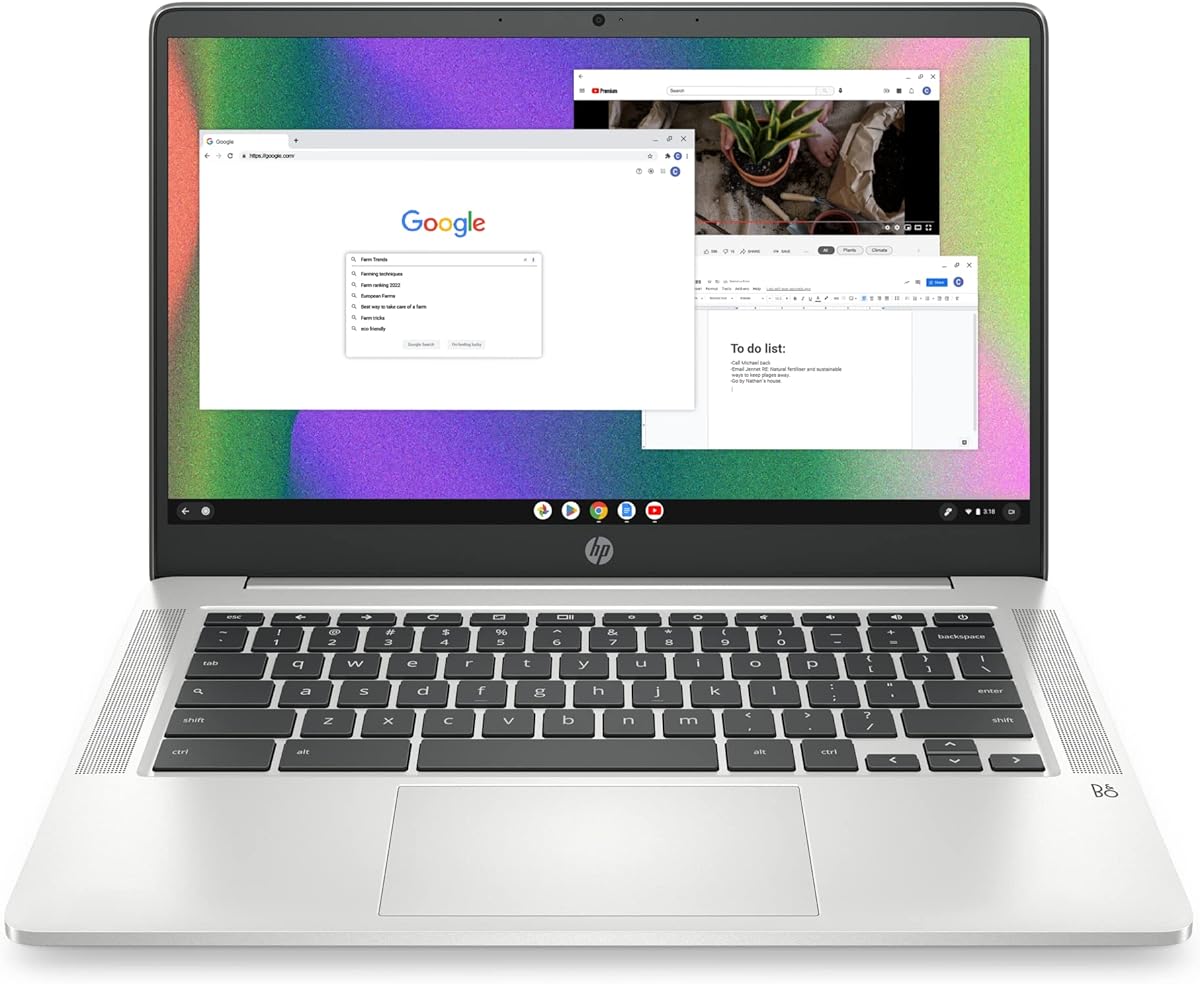
Samsung 14" Galaxy Chromebook Go Laptop PC Computer
The Samsung Galaxy Chromebook Go earns Best Overall Durability because it treats kid ownership as a physical sport rather than a lifestyle photo shoot. Samsung positions the machine as skillfully designed and military tough—language that matters when a fourteen-inch laptop lives in a backpack with water bottles, binders, lunch containers, and the occasional forgotten soccer cleat. Parents who have already replaced a cracked plastic lid or sticky keyboard after one rough semester will appreciate a Chromebook that advertises resilience instead of only thinness. Combined with Chrome OS automatic updates and Google’s familiar app set, the Go becomes a practical default for ages eight through fourteen who need homework, Google Classroom, supervised video, and occasional streaming without adult tech support every evening.
Simplicity is the second reason this model rises to the top of a kids-focused list. Chrome OS boots into a browser-first world: Gmail, Docs, Drive, Classroom, and the Play Store for Android apps when schools allow them. There is no maze of Windows update reboots mid-assignment and far less temptation to install random desktop games that invite malware. For parental controls, Google Family Link remains one of the clearest ecosystems for managing a child’s Google account—screen time, app approvals, and content filters—without installing third-party babysitting software that kids quickly learn to disable. That pairing of durable hardware intent and approachable software is rare in budget student computing, and it is why we weighted this Samsung ahead of several higher-spec Windows options for typical families.
Battery life is the third pillar of the kids-laptop decision, and Samsung cites a long-lasting twelve-hour battery for school days and beyond. That claim aligns with the real pattern of forgotten chargers and limited classroom outlets. A child who leaves home at 7:30 a.m. and returns at 5:00 p.m. should not need a midday plug if browsing, Docs, and video calls stay moderate. Faster Wi-Fi than the previous generation also matters on campus networks that choke during testing windows. Pair that with phone-and-Chromebook continuity for transferring photos of worksheets or controlling a phone from the laptop, and the Go becomes a family hub rather than an isolated homework slab that only works at one desk.
Performance expectations should stay honest if you want to avoid return-buyer remorse. The Intel Celeron N4500 with 4GB of RAM and 64GB of storage is built for web apps, light multitasking, and streaming—not local video editing, huge offline game libraries, or dozens of Chrome tabs with heavy extensions. Encourage cloud storage through Google Drive from day one and periodically clear the Downloads folder together so the machine does not silently fill up. If your child regularly opens a dozen research tabs plus a Meet call plus a music tab, consider the Lenovo IdeaPad 3i Chromebook’s 8GB configuration instead. For most elementary and early middle-school loads, though, the Go’s processor and Chrome OS responsiveness feel appropriate and appropriately boring in the best way.
Durability still benefits from household habits even when the marketing leans military-tough. Buy a padded sleeve, keep liquids in a separate backpack pocket, and teach two-hand opening so the screen is never yanked by one corner. Military-tough language is not a promise that concrete stairs are harmless; it is a signal that the design brief included drops and dings rather than only café aesthetics. Compared with convertibles, a clamshell also means fewer hinge positions for a younger child to force incorrectly. That mechanical simplicity supports the editorial theme of this guide: the best kids laptop is often the one with fewer ways to fail.
Who should skip it? Families locked into Windows-only school portals, CAD tools, or specialized desktop apps should look at the MOONFISH or NIMO Windows options instead. Very young children who only need alphabet games are better served by the educational Kids Laptop toy in this pack—not a full Chromebook with a Google account. Everyone else shopping for a durable, parent-controllable, all-day school companion should start here and only move on if they specifically need a larger screen, more RAM, or a convertible tablet mode for drawing-heavy classes.
In short, the Galaxy Chromebook Go is our default recommendation because it wins the four-way kids rubric without requiring parents to become IT administrators. Durability intent, parental controls through Family Link, Chrome simplicity, and long battery life are the features that actually determine whether a school laptop still works in April. Specs matter, but they matter less than whether the device is still in one piece, still charged, and still inside the rules you set.
Best for elementary through early high school students on Google Classroom or similar web platforms, especially families who want Family Link parental controls and a chassis story that acknowledges backpack reality. Ideal when battery endurance and simplicity matter more than Windows software compatibility or a flashy convertible hinge.
Create a supervised Google account with Family Link before the first school login. Enable screen-time schedules for weeknights, approve apps intentionally instead of tapping through prompts, and teach your child to save everything to Drive. Add a padded sleeve even with a tough chassis—resilience marketing is not magic armor against crushed backpacks or yogurt leaks.
Choose Samsung when build toughness and Samsung’s ecosystem extras matter most. Choose the HP Chromebook 14 when you want the longest advertised battery window and a proven thin-and-light classroom traveler with Fast Charge for quick top-ups between activities. Both are excellent; the tie-breaker is whether your anxiety is about drops or about dead batteries.
We may earn a commission at no additional cost to you.
If your household’s defining laptop failure mode is a dead battery at 2 p.m., the HP Chromebook 14 deserves the Best All-Day Battery badge without much debate. HP advertises up to fourteen hours of battery life—enough for school, a bus ride, homework at a grandparent’s house, and still a little buffer for a show in the evening if parents allow screen time. Fast Charge technology that moves from empty to about fifty percent in roughly forty-five minutes is equally parent-friendly: a short kitchen-counter top-up before soccer practice can rescue the evening without hunting for a spare power brick in the junk drawer.
Durability here is more about sensible thinness and daily carry than military-spec marketing copy. The Chromebook is designed to move room to room and ride in a backpack without feeling like a brick in a fourth grader’s shoulders. Pair it with a simple case and you cover most kid mishaps short of true catastrophe. The mineral silver finish and ash gray keyboard look school-appropriate rather than toy-like, which helps older elementary and middle-school kids take the device seriously instead of treating it like a disposable gadget. An anti-glare fourteen-inch HD display reduces reflections under harsh classroom fluorescents, even if pixel density trails Full HD rivals like the Lenovo IdeaPad 3i or Flagship Chromebook.
Simplicity and parental controls follow the Chrome OS playbook that makes Chromebooks the default kid recommendation for a reason. Children get a fast boot, sandboxed apps, and a browser that stays up to date without weekend update projects. Parents get Family Link supervision on the child’s Google account, plus the comfort that Chromebooks tend to resist the malware drama of unsupervised Windows installs. The Intel Celeron N4120 quad-core chip is positioned for assignments, streaming, and everyday multitasking—not local 3D creation suites. Intel UHD Graphics 600 supports smooth 4K streaming claims for living-room movie night when parents allow it, which is more entertainment flexibility than many expect from a student Chromebook.
Memory and storage require household habits more than they require another shopping tab. Four gigabytes of RAM and sixty-four gigabytes of eMMC are adequate when work lives in the cloud; they feel cramped when a child downloads every lecture video and never empties Downloads. Teach Drive-first workflows on day one and make “clear Downloads every Sunday” a chore like emptying the dishwasher. Rock-solid dual-band Wi-Fi and Bluetooth cover headphones and classroom hotspots. The multi-touch pad with four-finger gestures helps kids navigate without wrestling a mouse on tiny desks, which is a small simplicity win that reduces lost peripheral drama.
From a sustainability and confidence angle, ENERGY STAR certification and EPEAT Silver registration will not matter to a ten-year-old, but they matter to parents who want the device to be a responsible long-term tool rather than disposable junk. The one-year limited hardware warranty is standard Chromebook territory; still register the product and keep the order confirmation. Battery longevity over years also depends on heat and constant-to-100% charging habits—another reason Fast Charge plus partial top-ups can be healthier than leaving the laptop cooked on a bed under a pillow.
This HP is the pick when battery anxiety outranks the need for a sharper FHD panel or a tougher-sounding military build story. It is not the pick when your school mandates Windows apps, when your teen routinely edits large local files, or when you specifically want a touchscreen convertible for art classes. For most families optimizing for simplicity, parental controls, and genuine all-day power, it remains one of the most rational Chromebooks in the pack and a very close runner-up to the Samsung Go overall.
If you are torn between Samsung and HP, invent a one-week diary of your child’s actual day: count hours away from outlets and count how roughly the backpack is treated. More dead-battery incidents point to HP. More drops, dings, and “it was at the bottom of the bag” stories point to Samsung. Either choice beats an under-prepared Windows machine bought only because it looked more like an adult laptop in the product photos.
Lower brightness one notch in classrooms, close unused tabs, and use Fast Charge during short windows between activities. Keep the charger in the backpack anyway—fourteen-hour claims assume moderate use, not nonstop video calls plus gaming streams with brightness pinned at maximum.
Parents of kids ages eight to fourteen who need a no-drama school Chromebook with maximal unplugged time. Especially strong for families who travel between households, share custody schedules, or have limited access to classroom outlets during long testing days.
We may earn a commission at no additional cost to you.
HP Chromebook x360-14inch Touchscreen Tablet - Google Laptop 2in1 - FHD Display
Creative and kinesthetic learners often fight clamshell laptops: they want to circle answers, sketch diagrams, label maps, or flop the screen for couch reading after sports practice. The HP Chromebook x360 answers that with a fourteen-inch FHD IPS touchscreen, a stylus pen in the box, and four modes—laptop, tablet, tent, and stand. For kids ages eight to twelve especially, that flexibility turns homework from a typing chore into something closer to paper, while Chrome OS keeps the software side simple and parent-manageable through the same Family Link patterns used on other Chromebooks in this guide.
Durability is a nuanced story on convertibles and deserves a frank paragraph. The hinge enables the magic and also becomes a wear point if a child folds the screen while pencils or earbuds are still on the keyboard. Teach a two-hand open-and-flip habit, keep crumbs out of the fold, and buy a case that supports tablet mode instead of fighting it. Relative to the Samsung Chromebook Go’s military-tough clamshell pitch, the x360 trades some rugged simplicity for interaction flexibility. That trade is worth it when art electives, annotated PDFs, or digital notebooks are part of the school week; it is less worth it for a child who already breaks toys by twisting them.
Battery and connectivity stay aligned with Chromebook strengths: long battery life for school days, Fast Charge habits familiar from the broader HP family mindset, and modern Wi-Fi 6E networking that helps on congested campus bands during peak periods. A backlit keyboard helps evening homework under dim lamps without forcing the overhead light that wakes siblings. The FHD webcam with privacy shutter is a quiet win for parents who want kids to learn “camera covered when not in class,” which is both a safety habit and a simplicity habit—fewer accidental on-camera moments during chaotic mornings.
On performance, this pack listing highlights a capable Intel N-series class processor and multitasking-friendly positioning aimed at school kids, Chrome tabs, Android apps, and some lighter gaming. Treat gaming expectations carefully—Chromebooks can run lighter titles and cloud games, but they are not substitutes for dedicated gaming PCs, and parental controls should gate store installs either way. For Docs, Classroom, Canva-style creativity, and stylus note-taking, the x360 feels purpose-built. Confirm the exact RAM and storage on the offer you buy, because convertible listings sometimes bundle multiple configurations under similar titles.
Simplicity for kids improves when you preset the modes as part of onboarding. Show laptop mode for essays, tablet mode for diagram labeling with the stylus, tent mode for watching a teacher video on a bunk bed, and stand mode for following a recipe-style science project at the kitchen counter. When children know the intended posture for each task, they are less likely to wrench the hinge experimentally. That small training session is as important as any spec comparison in this niche.
Choose this model when your child learns by touching and drawing, or when a shared family device needs tablet mode for reading and tutoring. Choose a tougher clamshell Samsung or a longer-battery HP 14 when the priority is surviving hallway chaos with fewer moving parts. Either way, set up Family Link the same night the box arrives so parental controls exist before curiosity explores the entire Play Store in tablet mode, where app icons can feel even more tap-friendly and tempting.
Laptop mode for essays, tent mode for watching teacher videos, tablet mode for diagram labeling with the stylus, and stand mode for kitchen-table tutoring. Practice each mode once together so hinges are guided rather than forced, and store the stylus in the same sleeve pocket every day.
Pick the x360 for touch and stylus creativity. Pick the Samsung Go when you want the most durability-forward clamshell and a simpler fold that younger kids are less likely to stress. If your child is both rough on gear and artistic, prioritize a tough clamshell plus a drawing tablet later rather than forcing one device to do every job.
Tablet mode does not bypass Chrome OS supervision. Keep Family Link active and review stylus-friendly apps before approving them—drawing tools are wonderful; unmoderated chat apps are not. Revisit approvals monthly because creative kids request tools constantly.
We may earn a commission at no additional cost to you.
The Lenovo IdeaPad 3i Chromebook is the growing-student answer inside this pack: a 15.6-inch Full HD canvas and 8GB of RAM that make research papers and split-screen Docs-plus-Classroom layouts less painful. Younger kids can use it, but it especially shines for middle schoolers who have outgrown tiny HD panels and constant “Chromebook is slow” complaints caused by memory starvation on 4GB machines. If your household soundtrack includes “it froze again” during homework hour, memory is often the culprit more than the brand name on the lid.
Simplicity remains Chrome-native, which keeps this large-screen option inside our parental-control comfort zone. Kids get a fast, familiar Google environment; parents keep Family Link and school-managed Chrome policies where applicable. Lenovo’s Abyss Blue chassis looks more “real laptop” than toy, which can improve care habits for kids who refuse anything that looks childish. A physical lock slot supports classroom theft deterrence in open libraries—an underrated durability-of-ownership feature even if it does not harden the plastic against drops the way Samsung’s military-tough story tries to.
Battery life up to about ten hours is solid for many school days, though it sits behind the HP Chromebook 14’s endurance narrative and roughly behind Samsung’s twelve-hour positioning. If your child has after-school activities without outlets, weigh that gap carefully and consider packing the charger even when the morning battery icon looks healthy. Performance from the Celeron N4500 is appropriate for web workloads; the extra RAM is the real upgrade, letting more tabs and Android apps coexist before stuttering begins. That makes the IdeaPad 3i a simplicity win in daily feel even when the CPU family looks similar to other Celeron Chromebooks on paper.
Ports matter for kid practicality more than adults admit. USB 3.2 Gen 1 and USB-C mean a wired mouse, a flash drive from a teacher, and modern chargers can coexist without a grocery bag of dongles. The slim portable design still slips into larger backpacks, but measure against binder width—fifteen-inch machines are the ones that force zipper fights and corner cracks when kids force a bag closed. For families who work primarily at a desk or kitchen table and want a bigger, clearer screen with Chrome simplicity, the IdeaPad 3i is an excellent rank-four pick.
Durability advice is size-aware: larger lids flex more when tossed into lockers, so a hard sleeve pays for itself. Teach kids not to pick up the open laptop like a serving tray. The 720p camera is fine for attendance checks and tutoring; remind students about background clutter and mute discipline. None of that is glamorous, but these operational details determine whether a “best laptop for kids” choice still feels best in month six.
Skip it if you need maximum toughness in a lighter fourteen-inch shell (Samsung Go) or absolute maximum battery (HP 14). Also skip if Windows software is mandatory. Otherwise, this is the Chromebook to choose when “my kid keeps twenty tabs open” is the household complaint you hear every week and you want to solve it without leaving the Chrome OS parental-control ecosystem.
Strong for ages ten to sixteen who type longer essays and benefit from FHD clarity. Younger kids may prefer a lighter 14-inch model they can carry independently without asking a parent to zip the backpack.
Show your child split-screen shortcuts, pin Classroom and Docs, and set a household rule: close streaming tabs during homework. Eight gigabytes helps, but habits still decide whether the machine feels snappy in April after months of extension clutter.
We may earn a commission at no additional cost to you.
Lenovo’s Flagship Chromebook packing a MediaTek Kompanio 520 and a 14-inch FHD touchscreen sits in a sweet spot for kids who want touch without a full convertible hinge lifestyle. Finger navigation on Chrome OS feels natural for younger users who still think in taps more than trackpad gestures. The 1920x1080 IPS panel makes educational videos and Classroom materials clearer than HD-only budget screens, which reduces squinting during evening homework and makes shared tutoring easier when a parent sits beside the child at an angle.
Battery and efficiency are part of MediaTek’s pitch: the octa-core Kompanio 520 is designed for class-leading battery life and reliably connected everyday performance. In kid terms, that means Docs, streaming lessons, and Wi-Fi 6 classroom connections without sounding like a jet engine under a quiet quiz. At about 2.86 pounds and under an inch thick, it is one of the easier full Chromebooks in this pack for smaller students to carry between classes—an underrated durability factor because lighter devices are less likely to be dragged by a single strap or dropped from shoulder height when a child readjusts a heavy bag.
Parental controls and simplicity again ride on Chrome OS—Family Link, automatic updates, and a reduced malware surface compared with unsupervised Windows. The integrated 720p webcam with privacy shutter and dual array microphones supports remote learning without forcing parents to tape over a camera with sticky notes that leave residue. Ports cover USB-A, USB-C, microSD, and a headphone jack—practical for school headphones and expanding storage when the 64GB eMMC fills with downloaded videos that should have lived in Drive.
Durability is everyday-student rather than military-branded. The slim chassis needs a sleeve, full stop. Teach kids not to pick the laptop up by a corner of an open screen, and wipe the touchscreen with an appropriate cloth so smears do not become permanent grit scratches. Compared with the Samsung Go, you gain a sharper touchscreen and Wi-Fi 6; you give up Samsung’s tougher marketing story. Compared with the HP x360, you keep a simpler clamshell while still offering touch, which is often the right compromise for families who want taps without convertible complexity.
Online class readiness is a quiet strength. Privacy shutter, dual mics, and IPS viewing angles make Meet and Zoom sessions less frustrating, which means fewer “can you hear me” interruptions that derail a child’s confidence. For parents, that reliability is part of simplicity: fewer emergency calls home about broken tech. Keep expectations on 4GB RAM realistic—this is not the IdeaPad 3i’s multitasking comfort—but for focused schoolwork it remains highly usable.
Buy this when your child benefits from tap-friendly navigation and FHD clarity in a light package. Look elsewhere if you need 8GB RAM (IdeaPad 3i), maximum advertised battery hours (HP 14), stylus-first convertibility (HP x360), or the most drop-conscious clamshell story (Samsung Go).
Privacy shutter, dual mics, and a sharp display make this a strong Zoom/Meet machine for hybrid schedules. Practice mute/unmute and camera etiquette once before the first graded session so the technology is not the thing being graded.
Use the microSD slot for offline videos and large project files. Keep the internal 64GB lean so Chrome OS updates and apps have room to breathe. A ten-minute monthly cleanup prevents the mysterious slowdowns parents often blame on “the Chromebook getting old.”
We may earn a commission at no additional cost to you.
MOONFISH 2026 Laptop Computer Window 11 Pro
Chromebooks dominate kid recommendations for good reason, but some schools still require Windows-only testing software, specialty apps, or full Office desktop workflows. The MOONFISH 2026 laptop is the pack’s high-memory Windows answer: a 15.6-inch FHD IPS notebook with 16GB of RAM, a 256GB SSD, Windows 11 Pro, and lifetime Office 365 called out in the listing. For a middle or high schooler who has outgrown Chromebook limitations, that configuration feels like a real computer rather than a browser appliance, and the kids mention in the product positioning is more than decorative.
Simplicity is the challenge and the responsibility. Windows can be simple if you lock it down; it can be chaotic if you do not. Plan an evening for Microsoft family safety settings, a standard user account for the child, supervised browser profiles, and clear rules about installing games. Without that work, you lose the parental-control advantage Chromebooks provide almost for free. With that work, you gain software flexibility Chromebooks cannot match. This is the central tradeoff of every Windows kids laptop in 2026, and MOONFISH does not escape it—it simply gives you enough RAM and storage to make the locked-down environment pleasant.
Durability and battery sit in the “responsible student portable” category rather than the backpack-tank category. At roughly 3.5 pounds and 0.8 inches thin in silver, it travels well but deserves a sleeve immediately. The 5000mAh battery aims at all-day productivity claims; real-world results depend on brightness and whether kids stream while working in multiple Office windows. Ports including USB 3.0, Mini HDMI, and microSD help connect classroom projectors and expand storage—useful when project files balloon beyond what Chromebook users would keep local.
Performance from the 4425Y-class processor with 16GB of RAM is the headline for families tired of 4GB Chromebook stutter. Switching between browser research, Office documents, and a video call is the intended experience. It is still not a gaming laptop; treat creative suites and heavy local editing as possible in light doses, not esports-ready. Boot times and file transfers benefit from the SSD in ways eMMC Chromebooks rarely match when storing large local folders of PDFs, recordings, and slideshows.
Support messaging—two-year warranty, six-month free returns language, and phone/online support—matters for parents buying value Windows hardware online. Keep receipts, register the device, and note the support phone number in your password manager so you are not hunting through email during a midterm week failure. Comfortable full keyboard and large touchpad design also help longer writing assignments, which is where Windows student machines often justify themselves over smaller Chromebook keyboards.
Choose MOONFISH when Windows is non-negotiable and you are willing to configure parental controls manually. Choose a Chromebook when you want durability-plus-simplicity with less adult sysadmin time. If you need Windows but want a more learning-branded package with Type-C PD charging and a lay-flat hinge, compare against NIMO before deciding—memory favors MOONFISH, while learning-centric design extras may favor NIMO.
Create a child account, enable Microsoft Family Safety screen time and content filters, require admin approval for installs, and keep Windows Update on automatic. Revisit settings every semester as kids learn new workarounds, because they will.
Required desktop apps, advanced Excel coursework, certain music or production tools, or district software that simply will not run in a browser. If everything is already Google Classroom, stay Chromebook and save the management hassle for something more fun than Group Policy style parenting.
We may earn a commission at no additional cost to you.
NIMO 15.6" FHD Student Laptop for Kids & Learning
The NIMO 15.6-inch student laptop is explicitly pitched for kids and learning, and the pack rating of 4.8 suggests families are responding to that focus. An Intel N150 processor at a low 15W design targets quiet, stable performance for online classes and browsing—important when a whirring fan distracts a child during a timed quiz. The 15.6-inch Full HD panel and 175-degree lay-flat hinge are genuinely useful for parent-child tutoring on the couch: both people can see the screen without neck contortion, which turns “help me with this” into a calmer ritual instead of a battle over laptop angles.
Battery and charging are thoughtfully family-shaped, which is where NIMO scores on our battery pillar even without Chromebook-class hour claims. A 53Wh battery with a 65W PD charger and a long two-meter cable means homework can happen at the kitchen table without dragging a desk to the outlet. Type-C charging also means fewer proprietary bricks lost in the couch cushions. Expect solid school-day coverage for light learning loads; do not assume fourteen-hour Chromebook miracles if kids stream constantly at full brightness. Still, convenient charging is a parental-control adjacent virtue: when charging is easy, arguments decrease.
Simplicity features include fingerprint login so kids are not stuck resetting passwords every Monday morning before the bus, plus a backlit keyboard for evening work. Connectivity is generous: dual Type-C (one full-function), HDMI, three USB-A ports, headphone jack, and microSD. That plug-and-play attitude helps when a teacher suddenly requires a wired mouse or a flash drive submission. Metal A-cover styling under 1.7 kg keeps the machine portable for school bags without feeling like a toy, which helps older kids accept it as their real school computer.
Durability and support lean on the two-year manufacturer warranty and hassle-free return window messaging rather than military toughness claims. That is still meaningful for families buying online. Buy a sleeve anyway. On parental controls, treat it like any Windows learner: Microsoft Family Safety, limited user account, and careful app install rules. The 4GB RAM and 128GB SSD combination favors snappy boots and modest multitasking; serious tab monsters may still prefer the MOONFISH 16GB configuration or an 8GB Chromebook like the IdeaPad 3i.
The quiet, energy-saving processor story also supports focus—an underrated kids feature. A silent machine during online class means the child is less likely to fiddle with settings or complain about noise. MicroSD expansion helps when recorded lessons pile up. Wi-Fi and Bluetooth 5.2 coverage in the listing supports headsets and stable e-learning platforms, which matters more than peak synthetic benchmarks for this audience.
NIMO is the pick when you want a Windows-shaped student machine with learning-centric extras and strong review sentiment, without jumping to the higher-memory MOONFISH. It is less ideal when Chrome OS parental simplicity is your top priority or when you need a ruggedized backpack tank. If your school is Windows-optional, compare total stress: Chromebook + Family Link versus NIMO + manual Family Safety. Choose the lower-stress path unless a required app forces Windows.
Use lay-flat mode for shared reading, plug HDMI into a living-room display for presentation practice, and keep the long PD cable as the permanent kitchen charger so the brick never goes missing in a bedroom cave.
Choose NIMO for learning-focused design, Type-C PD convenience, and a strong rating at a lighter memory footprint. Choose MOONFISH when 16GB RAM, Windows 11 Pro management features, and Office 365-out-of-box positioning matter more for heavier coursework.
We may earn a commission at no additional cost to you.
This 15.6-inch student laptop targets schoolwork, online classes, browsing, and light home tasks with a configuration that looks right on paper for many teens: 8GB of DDR4 memory, a 256GB SSD, and a Full HD IPS display. Compared with 4GB/64GB Chromebooks, local storage and multitasking headroom improve immediately—especially for students who keep offline folders of PDFs and recorded lessons. The rose gold portable design also acknowledges a truth parents sometimes ignore: kids take better care of devices they feel proud to carry, which can be a surprising durability multiplier even without military-tough branding.
Battery and durability are standard student-notebook territory rather than category-leading claims. At about 3.7 pounds it is backpackable, but you should still invest in a sleeve and teach cable care around the compact charger. The backlit keyboard helps dim dorms and evening kitchens; fingerprint login keeps siblings out of each other’s homework profiles when accounts are set up correctly. Those small simplicity features reduce friction that otherwise turns into “I can’t log in” emergencies five minutes before class.
Simplicity depends on your setup discipline more than on the hardware. Out of the box, Windows invites tinkering. Create a school-only user, pin Classroom or browser shortcuts to the taskbar, remove desktop clutter, and decide whether gaming installs are allowed at all. Parental controls through Microsoft Family Safety can approximate Chromebook guardrails, but they are not automatic in the same way Family Link-on-Chrome feels for many parents. If you will not do that setup, do not buy this—or any Windows machine—for a young child.
Connectivity covers USB 3.0, Mini HDMI, Bluetooth, and a TF card slot—enough for a mouse, projector practice, and storage expansion. Performance should handle homework, research, document editing, streaming, and general multitasking; it is not positioned as a creator workstation or gaming rig. Given the 3.8 rating, buy with clearer eyes than the higher-rated NIMO or Chromebook leaders: read the latest reviews on the exact listing, confirm the processor generation shown at checkout, and keep expectations at solid daily student Windows, not premium ultrabook.
Where this model fits our unique rubric is mostly simplicity-through-pride and adequate battery for structured homework blocks, not championship endurance. It is a reasonable Windows pick when 8GB/256GB and a style-forward finish are the must-haves. It is a weak pick when you wanted the lowest-maintenance kid experience in the pack—that crown stays with the Chromebooks ranked above.
Choose it when your student wants Windows with 8GB/256GB and a look they will protect. Choose a Chromebook instead when parental simplicity, toughness, or marathon battery life outrank Windows compatibility. If you are comparing Windows options only, weigh NIMO’s learning-centric extras and rating against this model’s memory/storage balance and design.
Rose gold shows fingerprints and backpack scuffs quickly. A clear hardshell or neoprene sleeve preserves the look that motivated careful ownership in the first place, turning aesthetics into a durability strategy rather than a liability.
Parents who want the lowest-maintenance kid laptop experience should stick with Samsung, HP, or Lenovo Chromebooks. This notebook rewards families already comfortable administering Windows and verifying listing details carefully.
We may earn a commission at no additional cost to you.
The 10.1-inch mini netbook is a different species from the Chromebooks and Windows notebooks above. It runs Android 12 with Google Mobile Services, weighs about 1.76 pounds, and arrives as a kit with carrying bag, mouse, mouse pad, and adapter. For younger kids practicing typing, watching lessons, or using Android education apps on the go, that combination can feel approachable and complete. For a primary middle-school homework machine expected to run dense research and long essays, it is undersized—and ranking it ninth is an honesty requirement, not a dismissal of its travel niche.
Simplicity is Android-familiar: Play Store apps, a touch-friendly UI, and a pink portable aesthetic that signals kid device. Parental controls then become Google Family Link on an Android profile—or whatever app-level tools you install—rather than Chrome OS managed laptop policies. That can work well if your household already manages Android tablets; it is less ideal if you wanted a real laptop identical to school Chromebook carts. Do not assume “it has a keyboard, so it is a school laptop.” Teachers grading in Classroom will notice the difference when windows, files, and printing workflows get awkward.
Performance honesty is mandatory in a guide that claims to help parents. A 1.8GHz quad-core chip with 2GB of RAM and 64GB of storage—expandable toward large TF capacities per the listing—handles daily online tasks in a basic sense and will struggle when asked to behave like a 16GB Windows notebook. Dual USB 2.0 ports, headphone jack, Wi-Fi, and Bluetooth cover essentials. The 1280x800 IPS panel is fine for media and apps, less ideal for multi-window productivity. Battery expectations should be verified in recent owner reviews, as small Android netbooks vary widely by usage.
Durability benefits from low weight—less mass to swing into a doorway—but mini hinges and compact keyboards still need gentle habits. The included bag helps, which is more than many bare Chromebook boxes offer. Still, treat the device as a companion, not as the family tank. On our four pillars, it scores well on portability-related durability and on simplicity for app-centric kids, moderately on parental controls if Family Link is configured, and inconsistently on battery depending on how the child streams.
Rank nine reflects usefulness as a secondary travel or younger-child device, not as the default best laptop for kids answer for serious schoolwork. Buy it as a starter or companion for home schooling trips and app-based learning. Do not buy it as the only computer for a student whose teachers expect full Chromebook or Windows parity. If gift-givers insist on something small and cute, this is more computer-like than the educational toy—but the toy may still be wiser for true beginners who do not need the open internet yet.
Car rides, grandparents’ houses, and early typing practice with the included mouse. Keep major graded work on a fuller Chromebook or Windows machine when possible so a constrained Android netbook never becomes the reason an assignment is late.
Explain to kids that this is a mini Android notebook, not a gaming PC. App choices and cloud storage discipline matter even more when RAM is tight, and parental approvals should be stricter because the Play Store is a very large playground.
We may earn a commission at no additional cost to you.
The final product in this pack is intentionally different: a kids educational laptop toy with a 4.3-inch color screen and forty-eight learning modes spanning alphabet, mathematics, colors, animals, general knowledge, logic, music, clock reading, and calendar skills. It exists for ages five and up who want to imitate grown-up laptop posture without needing Wi-Fi, Google accounts, or parental control dashboards. In a roundup about best laptops for kids, that distinction matters—because many gift-time shoppers confuse toy form factors with school-ready computers and then feel frustrated when Classroom will not load on a device that was never a computer.
Durability and simplicity are the toy’s strengths in the exact ways that matter for early childhood. There is no OS to corrupt, no browser history to audit, and no battery anxiety tied to eight-hour Zoom days. The ergonomics mimic real laptops with a realistic mouse and keyboard so muscle memory starts early. Fun games test logic, memory, and speed after learning modes, which helps restless kids stay engaged without handing them an open internet connection. That is parental control in its purest form: the unsafe option simply is not present.
Battery here means toy-scale power, not all-day student computing, and that is fine. Treat it as living-room learning furniture. Remove the protective film on the screen as the listing notes, and supervise the first sessions so modes are exploratory rather than button-mashing chaos. Compared with the Android mini netbook, this toy is even more age-scoped and even less suitable as a homework machine—which is a feature for preschool and early-elementary households that are not ready for accounts and passwords.
Where this product helps the larger buying journey is sequencing. Families who jump from nothing to a full Chromebook sometimes overexpose young kids to the web before habits exist. Using an educational laptop first builds respect for keyboard time and mouse time. When a school later issues Chromebook logins, the child who already understands “this is a learning tool” often adapts faster and complains less about rules. That is a durability of behavior story as much as a hardware story.
Include it in your shopping story when you need an ages-5+ starter that teaches curiosity without internet risk. Pair a later real Chromebook purchase—Samsung Go or HP 14 for most families—when school demands arrive. Never substitute this for a district-required laptop; teachers cannot grade essays on a 4.3-inch learning toy, and no amount of enthusiastic marketing language changes that basic category boundary.
If relatives insist on buying a laptop for a kindergartner, point them here and save the Chromebook budget for later. You will avoid both wasted money and premature internet exposure, which is one of the cleanest parental-control wins available in this entire pack.
Ages 5–7: educational toy laptop. Ages 8+: move to a durable Chromebook with Family Link. Teen years: consider Windows only if coursework requires it. That ladder prevents overspending on real laptops too early and underbuying when school gets serious.
Share this distinction with grandparents before birthdays: toy laptop now, school Chromebook later. Clear category language prevents well-meant gifts that create account and supervision problems years too soon.
We may earn a commission at no additional cost to you.

Kids’ laptops fail mechanically more often than they become too slow for Docs. Prioritize a chassis story you trust—military-tough language like Samsung’s, or at least a light clamshell that fits a protective sleeve—over chasing the highest RAM number you will never use. A fourteen-inch Chromebook that survives the semester beats a fragile fifteen-inch Windows showcase that does not. Always budget for a sleeve or case on the same checkout; no listing’s durability claim replaces padding beside a water bottle. Inspect hinge feel, power-port strain relief, and whether the device is light enough for your child to carry without dragging.
Durability also includes social durability: devices kids are embarrassed to carry get tossed; devices they respect get sleeved. That is why finish and form factor are not only aesthetic. A rose-gold Windows notebook or an Abyss Blue Lenovo can encourage care in older kids, while a clearly toy-like device belongs in the early-learning lane rather than middle school.
Chrome OS plus Google Family Link is the path of least resistance for most families: screen time, app approvals, and supervised accounts without installing fragile third-party tools. Windows can be locked down with Microsoft Family Safety, but parents must do the work and revisit it as kids learn workarounds. Android mini netbooks sit in between. Educational toy laptops avoid the internet entirely for the youngest kids. Match the OS to your willingness to administer rules, not only to the school’s brand preference or a salesperson’s upsell.
A kid-friendly laptop should boot quickly, open Classroom or the browser without drama, and avoid constant maintenance popups. Chromebooks excel here because the model of computing is constrained on purpose. On Windows picks like MOONFISH, NIMO, and the rose-gold student notebook, simplify the desktop yourself: one school user, pinned apps, disabled surprise game launchers, and clear charging habits. The less cognitive load on the child, the more the device gets used for learning instead of troubleshooting. Simplicity is not anti-power; it is anti-friction.
All-day battery reduces lost chargers, classroom outlet fights, and evening arguments about who forgot the brick. The HP Chromebook 14’s up-to-fourteen-hour class claim and Fast Charge recovery set the endurance bar in this pack; Samsung’s roughly twelve-hour positioning is close behind for full school days. Larger Windows machines with bigger screens often trade some endurance for flexibility and local software power. Teach brightness discipline and cloud-first workflows so real-world results approach the marketing numbers instead of collapsing under streaming-at-full-brightness habits.
Ages 5–7 often need a toy laptop, not a real one. Ages 8–12 thrive on 14-inch Chromebooks—Samsung Go for toughness, HP 14 for battery, Lenovo Flagship for FHD touch, HP x360 for stylus creativity. Ages 13+ may want the Lenovo IdeaPad 3i’s 15.6-inch FHD and 8GB RAM, or a Windows machine if software demands escalate. Touchscreens help younger learners; convertibles add hinge care lessons. When in doubt, choose the smaller durable Chromebook over the larger fragile Windows machine for the first real laptop.
For Chromebooks, 4GB/64GB works with strict Drive habits; 8GB RAM on the IdeaPad 3i is the comfort upgrade for tab-heavy students. For Windows, prefer 8GB or 16GB and an SSD of 128GB or 256GB over tiny storage ceilings. Expand with microSD where available. Local game libraries are how kid laptops run out of space—set cloud and external-storage rules early, and make Sunday cleanup a recurring five-minute habit. Memory and storage are not just specs; they are chore charts.
Ask the school whether Chromebooks are supported, whether Windows apps are required for testing, and whether the district uses management profiles. A perfect durability champion fails if it cannot open the required secure browser. Bring that answer to this guide before you fall in love with a finish color or a stylus bundle. The best laptop for kids is compatible first, then durable, then parent-controllable, then simple, then long-running on battery.
For most families, the Samsung Galaxy Chromebook Go is the best single purchase because it balances durability-minded design, Chrome OS simplicity, Family Link parental controls, and roughly all-day battery life. If your child’s days are unusually long away from outlets, take the HP Chromebook 14 instead for its up-to-fourteen-hour class endurance and Fast Charge recovery. If school requires Windows software that will not run in a browser, switch the conversation to the MOONFISH 16GB model or the NIMO student laptop and plan a proper Microsoft Family Safety setup the night it arrives—not a week later after random games are already installed.
Usually yes for ages eight to fourteen. Chromebooks stay up to date automatically, resist casual malware better than unsupervised Windows PCs, and pair cleanly with Google Family Link for screen time and app approvals. Windows wins when a curriculum demands desktop applications Chromebooks cannot run, or when a student truly needs more local storage and multitasking headroom for specialized work. The better OS is the one that matches school requirements and the amount of admin time a parent can give without resentment. A locked-down Windows machine can be fine; an unlocked Windows machine in a child’s hands is a weekend chore generator.
Critical—more critical than most parents admit until the first semester crisis. Kids forget chargers, classrooms ration outlets, and after-school schedules rarely include a neat charging hour between robotics club and dinner. Aim for devices with credible all-day claims—HP’s up-to-fourteen-hour class and Samsung’s around-twelve-hour positioning in this pack—and still pack a charger. Fast Charge features turn short waits into usable percentage points. Battery life is not only convenience; it is equality for kids who cannot count on a free outlet near their desk.
On Chromebooks, create a supervised Google account with Family Link before the school account chaos begins, set screen-time schedules for school nights, require app approval, and enable SafeSearch. On Windows, use Microsoft Family Safety with a child account, block unauthorized installs, keep the parent account credentials private, and turn on automatic updates. On Android mini netbooks, use Family Link for Android and be stricter about Play Store approvals because the catalog is huge. For the educational toy laptop, enjoy the offline peace—and still set household time limits socially so “learning modes” do not become endless button-mashing past bedtime.
Yes for elementary workloads centered on Classroom, Docs, and a few tabs at a time. It becomes uncomfortable when middle schoolers keep research tabs, chat, music, and video calls open together, especially with Android apps running. If that sounds like your child, prioritize the Lenovo IdeaPad 3i Chromebook’s 8GB configuration or a Windows machine with 8GB to 16GB such as the rose-gold student laptop or MOONFISH. Also clean extensions and background apps; many “I need more RAM” complaints are actually clutter complaints.
Buy tough clamshells like the Samsung Galaxy Chromebook Go when backpack survival is the main fear and the child is hard on belongings. Buy a convertible like the HP Chromebook x360 when stylus annotation, tablet reading, and creative coursework matter more—and accept that hinges need gentler habits and a good case. There is no universal winner; match the failure mode you actually see at home. A creative kid who is also rough on gear may still be better served by a tough clamshell plus paper sketching, rather than a convertible that becomes a hinge repair story.
When the child is around five or older, wants to imitate laptop use, and does not yet have school web accounts. The Kids Laptop with forty-eight learning modes builds familiarity without internet risk, which is the strongest parental-control story in the pack. It is not a substitute for a district Chromebook once real homework portals arrive. Using it as stage one in a multi-year plan prevents overspending and overexposure. If a school already requires a Chromebook login, buy a real Chromebook and keep the toy as a sibling gift or travel boredom fixer.
Not strictly, but FHD helps during long reading and video lessons and often reduces squinting that kids describe as boredom or headaches. The HP Chromebook 14’s HD panel is acceptable for battery-first buyers who prioritize endurance over sharpness. Lenovo’s FHD Chromebooks and the Windows 15.6-inch options are easier on eyes for heavier homework. If your child already complains after study sessions, consider screen sharpness, brightness habits, and break schedules together rather than assuming the only fix is a more expensive CPU.
Use a padded sleeve every single day, keep liquids in a separate backpack pocket, teach two-hand open-and-close habits, ban stacked textbooks on closed lids, and clean keyboards before crumbs become sticky failures. For convertibles, practice mode changes together. For Windows machines, use surge-safe charging locations away from beds and carpets. Durability is about fifty percent hardware choice and fifty percent household routine. The best durability feature you can buy after checkout is consistency.
Treat the 10.1-inch Android mini as a portable companion for apps and light tasks, especially with its bag-and-mouse bundle that reduces missing-accessory chaos. Treat Chromebooks as the primary school devices for Google Classroom parity, stronger laptop ergonomics, Wi-Fi behavior closer to school fleets, and more predictable parental management. Many families eventually own both stages—one for travel novelty, one for graded work—but if you can only buy one serious homework machine, choose a Chromebook from the top of this list and keep the mini netbook idea for later or for a younger sibling.
The best laptops for kids in 2026 are the ones that survive backpacks, respect parent-set boundaries, stay simple enough for independent homework, and remain charged until dinner. That is why this roundup elevates the Samsung Galaxy Chromebook Go for durability-minded everyday school use, the HP Chromebook 14 for marathon battery life, and the HP Chromebook x360 for creative learners who need touch and a stylus—while still mapping every pack product to a clear role instead of pretending every device is a universal winner.
If your school lives in Google’s world, stay with Chromebooks and invest your energy in Family Link and a good sleeve. If Windows is mandatory, choose MOONFISH for memory headroom or NIMO for a learning-focused student setup, and do not skip parental configuration. Younger children can start on the educational Kids Laptop toy without pretending it is a homework computer, and travel-focused families can treat the Android mini netbook as a companion rather than a primary school machine.
Pick the machine that matches your child’s age and your household’s tolerance for tech admin, then spend the first evening setting controls and habits. The right laptop disappears into the school routine; the wrong one becomes a nightly troubleshooting session that erodes everyone’s patience. Use the checklist, trust the tradeoffs around durability, parental controls, simplicity, and battery, and buy once with eyes open.