Detailed review
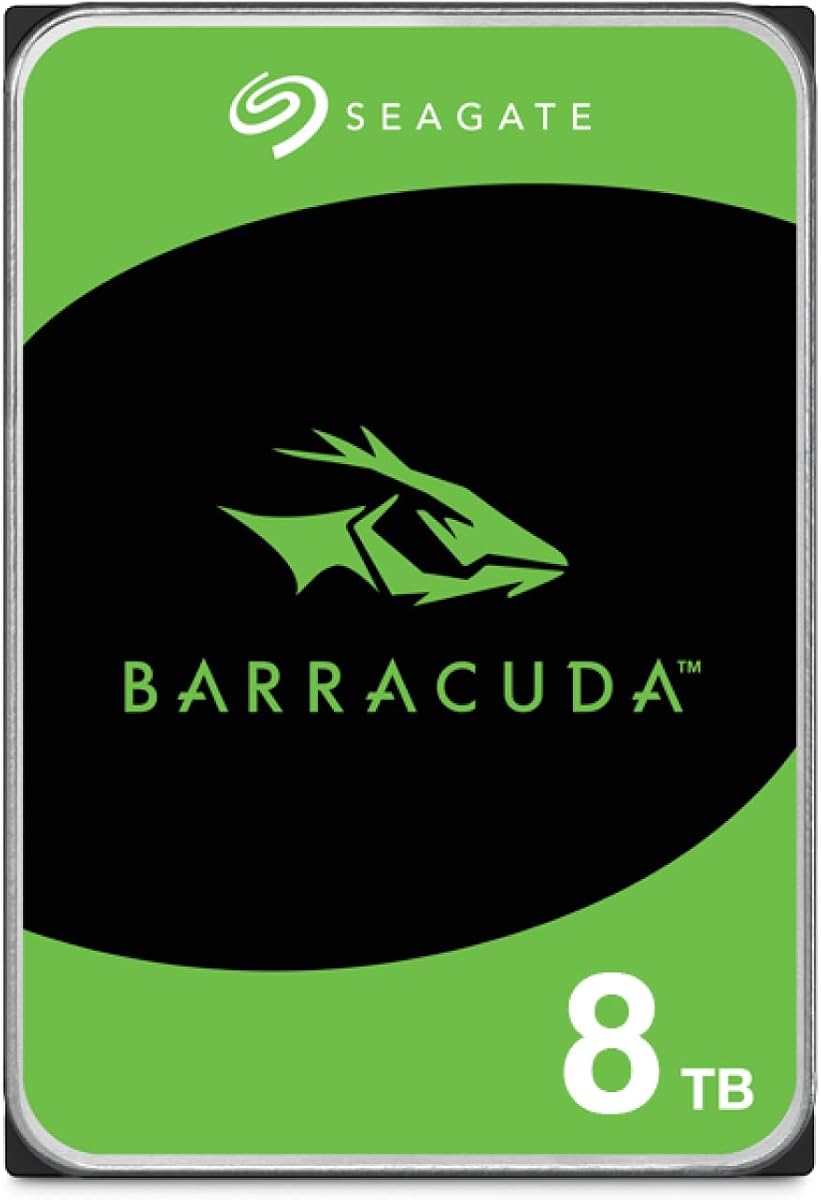
Capacity is the whole pitch. Eight terabytes of mechanical storage still dwarfs what most midrange SSDs deliver for the same money, and that gap matters when your hobby is 4K footage, lossless music, disk images, or a decade of camera RAW files. Pair this BarraCuda with a 1TB or 2TB NVMe for Windows or macOS (via supported desktop hardware), then point libraries, downloads, and backup targets at the HDD. You keep snappy application launches while the spinning drive absorbs the cold data that would otherwise chew through flash endurance and budget.
BarraCuda marketing leans on twenty years of Seagate internal-drive iteration, and that heritage shows up as broad motherboard and PSU cable compatibility rather than exotic features. There is no NASware firmware story here, no IronWolf Health Management dashboard, and no claim that you should drop four of these into a Synology volume. Treat it as a single-drive desktop workhorse. Frustration Free Packaging means you typically receive an anti-static bag—no retail box art, no screws, no SATA cable—so keep a spare cable and case tray screws on hand before you start the install.
Noise and heat are class-typical for a large 5400 RPM platter stack: audible under a desk if the case has open airflow, quieter once the side panel is on and fans are tuned. Vibration isolation grommets in modern cases help; if you are mounting multiple HDDs, leave space between cages so heat does not stack. For gamers, load times for individual titles still belong on SSD, but the BarraCuda is excellent for the “installed but rarely played” library that would otherwise force endless uninstall cycles.
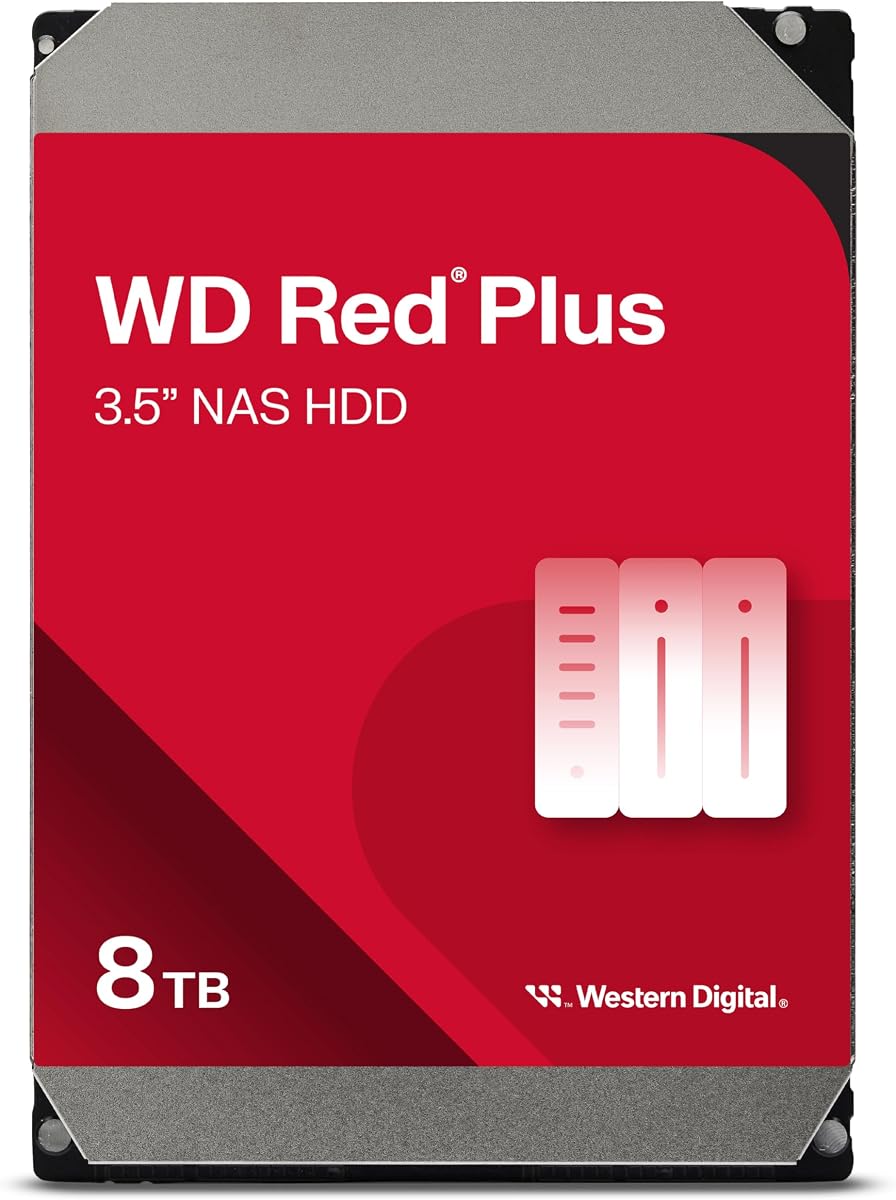
Compared with the WD Blue 12TB later in this list, the 8TB BarraCuda is the safer everyday pick when you do not need the absolute largest plate or the 7200 RPM cache bump. Compared with Red Plus and IronWolf Pro, it is quieter in a single-drive PC and usually simpler to buy, but it will not forgive multi-bay vibration and RAID rebuild stress the way NAS firmware does. If your chassis only has one spare bay and your data is personal media rather than a shared business volume, this is the drive to start with.
Setup is straightforward: update the motherboard BIOS if the board is ancient, connect SATA data to a chipset port rather than a dusty ASMedia add-in if you have a choice, and use the motherboard’s SATA power or a quality modular PSU cable—not a daisy-chained molex adapter from the junk drawer. Format with your OS’s native tools, enable SMART monitoring in CrystalDiskInfo or Drive Health, and schedule a monthly backup to a second disk or cloud. Mechanical drives fail; redundancy is part of owning them, not optional spice.
Who should buy the 8TB BarraCuda
Choose this drive if you build or upgrade a desktop, already have an SSD for the OS, and need a big secondary volume for media and games. Skip it if you are filling a NAS bay, need laptop 2.5-inch height, or want maximum random IOPS—buy flash for that last job.
Desktop setup notes
Mount it in a 3.5-inch tray with all four screws, route the SATA cable away from GPU fans, and label the volume clearly so you never install apps to the wrong disk. After the first fill, leave 10–20% free space so the drive does not thrash as the filesystem fragments over years of use.
Versus WD Blue 12TB in this roundup
Step up to the WD Blue 12TB when your library already overflows 8TB or you prefer Western Digital’s cloning toolkit. Stay with the BarraCuda when 8TB is enough and you want the higher community rating and simpler “good enough” desktop story.