Expert Review & Guide

Best Gaming Mouse Under 100 in 2026: Wired and Wireless

Crossing into the under-one-hundred gaming mouse tier changes what you can realistically expect from a daily driver. Sensors stop feeling like marketing theater, wireless links become tournament-viable for most living-room and bedroom setups, and shell design finally matters as much as DPI numbers. You can choose a forty-nine-gram ambidextrous wireless mouse for aggressive fingertip aiming, a classic eleven-button ergonomic brick for MMO and productivity macros, or a flagship-inspired wireless G502 successor with optical-mechanical switches and wireless charging support. The hard part is matching those capabilities to your grip, your games, and how often you are willing to charge or swap a battery.

This roundup sticks strictly to a fixed product pack that spans ultralight value wireless, Razer’s ergonomic and competitive lines, Logitech’s legendary G502 family in wired and wireless form, a simple DeathAdder Essential for first upgrades, a tri-mode G57 for multi-device desks, and SteelSeries’ Rival 3 Gen 2 for lightweight wired RGB. We are not inventing boutique mice outside that list. Every image, URL, rating, and core spec below comes from those pack entries so the comparison stays honest and shoppable.

Start with the three top picks if you want a fast shortlist. Use the comparison table to filter by weight class, button count, and wired versus wireless. Then read the individual reviews for grip fit, software notes, and the tradeoffs that marketing pages skip. The buying guide and checklist at the end cover DPI versus in-game sensitivity, polling rate, switch types, PTFE feet, and when a cheaper shell is actually the smarter buy.

Top Gaming Mice Under One Hundred

As an Amazon Associate we earn from qualifying purchases. We may earn a commission at no additional cost to you.

Side-by-Side Specs for Every Pack Mouse

Scan connectivity, sensor class, and control layout before you commit to a shape. Ratings are pack-sourced shopper averages. Specs intentionally skip street prices so you can compare feel and features first, then check current listings when you are ready to buy.

#ProductSpecificationsScore
1
  • 49g ultralight tri-mode
  • PAW3395 26K sensor
  • KAILH GM8.0 + PTFE feet
9
2
  • Focus+ 26K optical sensor
  • 11 programmable buttons
  • HyperScroll + Chroma zones
9.2
3
  • HERO up to 25,600 DPI
  • Adjustable weight tray
  • 11 buttons, dual-mode scroll
9.2
4
  • Focus Pro 30K sensor
  • 82g mass-central shell
  • Up to 280 hr AA wireless
9
5
  • 58g lightweight wired
  • Gen-3 optical switches
  • 8500 DPI + Speedflex cable
9
6
  • 18K 5G optical sensor
  • HyperSpeed + Bluetooth
  • 9 controls, long battery life
8.8
7
  • Tri-mode 2.4G/BT/USB-C
  • 800–8000 DPI steps
  • 80g rechargeable body
8.8
8
  • 6,400 DPI optical sensor
  • Five programmable buttons
  • Rubber grips, wired only
9
9
  • LIGHTFORCE optical-mech
  • HERO 25K + LIGHTSPEED
  • 13 buttons, POWERPLAY ready
9
10
  • TrueMove Core 8500 DPI
  • 77g lightweight wired
  • 1.35ms click latency claim
8.4

1. ATTACK SHARK X3 - Best Ultralight Value

ATTACK SHARK X3

ATTACK SHARK X3

9/10★★★★★

The ATTACK SHARK X3 is the mouse that makes the under-one-hundred category feel newly competitive for aim-focused players. At a claimed forty-nine grams, it sits in true ultralight territory that used to require spending into enthusiast wireless lines. The symmetrical shape favors claw and fingertip grips common in Valorant, CS2, and Overwatch, and the shell’s anti-sweat texture helps during long warm rooms without turning into a sandpaper glove. If you have been fighting a heavy office mouse or a dated mid-weight gaming shell, the first hour on the X3 usually feels like someone removed a brick from your wrist.

  • 49g symmetrical wireless shell
  • PAW3395 up to 26,000 DPI
  • Tri-mode BT / 2.4G / wired
Check Price →
✓ Pros
  • Genuine ultralight feel that rewards fingertip and claw flicks
  • Flagship-class PAW3395 sensor rare at this shopping tier
  • Bluetooth, dongle, and wired modes cover laptop and desktop desks
  • Long claimed battery life reduces charge anxiety during ranked weeks
  • TTC scroll encoder and KAILH GM8.0 switches feel more premium than the badge suggests
✕ Cons
  • Software polish trails Synapse and G HUB for deep macro ecosystems
  • Symmetrical shell may feel small for large palm-grip hands
  • White finish shows desk dust and pad dye faster than darker shells

Detailed review

Sensor performance is the headline that justifies putting this model near the top of any value shortlist. PixArt’s PAW3395 brings programmable sensitivity up to twenty-six thousand DPI, six hundred fifty IPS, and fifty g acceleration with a one-thousand-hertz polling path in the performance modes. Most players will still live between four hundred and sixteen hundred DPI with in-game sensitivity doing the fine tuning, but the sensor headroom means you are not fighting smoothing or angle snapping when you make micro-corrections on a headshot line. Lift-off distance can be tuned in software so the mouse does not jitter when you reposition mid-strafe.

Connectivity flexibility is unusually strong for a lightweight shell. Bluetooth 5.2 covers secondary laptops and tablets, the two-point-four-gigahertz dongle handles low-latency gaming, and a wired path remains available when the battery is low or you want a fixed desktop link. The two-hundred-hour maximum battery claim is usage-dependent, yet even conservative real-world sessions tend to stretch across many evenings before a recharge becomes urgent. That matters if you hate interrupting a ranked block to hunt a cable.

Click and scroll feel punch above the brand’s mainstream recognition. KAILH GM8.0 micro switches are rated beyond eighty million clicks with a defined operating force and short travel that stays crisp for spray control and counter-strafe taps. The TTC encoder scroll wheel has a sharp step that FPS players appreciate when swapping weapons quickly. PTFE feet are larger and rounder than many budget skates, which improves stopping power on cloth pads after a long flick. Dimensions around four point six seven by two point four by one point five six inches keep the mouse compact; measure your hand before assuming it will fill a large palm the way a Basilisk does.

Programmable buttons and macros exist, though the ecosystem is less mature than Razer Synapse or Logitech G HUB. Power users who live in multilayer MMO binds may prefer the Basilisk or G502 families. Competitive FPS and hybrid study-plus-game users, however, get almost everything that matters: low mass, credible sensor, multi-mode wireless, and durable switches. The white colorway looks clean on camera and on bright desks, but it will collect visible dust, so a weekly wipe keeps presentation sharp.

Choose the X3 when weight and sensor quality outrank brand prestige and deep RGB ecosystems. Skip it if you need a tall palm-filling hump, a dense side-button cluster for twelve-skill bars, or the most polished cloud-synced software stack. Inside this pack, it is the clearest answer for players who want modern ultralight wireless without leaving the under-one-hundred shopping lane.

Who should buy the ATTACK SHARK X3

Fingertip and claw players with small to medium hands who prioritize flick speed over palm support will feel at home. It also suits travelers who want one mouse for a work laptop on Bluetooth and a gaming PC on the dongle. Content creators who film desktop setups may like the white shell for contrast against dark pads.

Setup tips for competitive play

Disable Windows enhance pointer precision, set a stable DPI step you can reproduce on every machine, and keep polling at one thousand hertz for the dongle mode. Map DPI shifts only if you truly change sensitivities between menus and aim trainers; otherwise a single locked step builds better muscle memory. Clean the PTFE feet after the first week of pad dust transfer so glide stays consistent.

How it compares inside this pack

Against the Razer Viper V3 HyperSpeed, the X3 is lighter and rechargeable rather than AA-powered, while the Viper brings a more established competitive brand stack and Focus Pro sensor pedigree. Against the G57, the X3 offers a higher-end sensor and lower mass. Against wired options like the Cobra, you trade cable simplicity for desk freedom.

Check Price on Amazon →

We may earn a commission at no additional cost to you.

2. Razer Basilisk V3 - Best Wired Ergonomic

Razer Basilisk V3

Razer Basilisk V3

9.2/10★★★★★

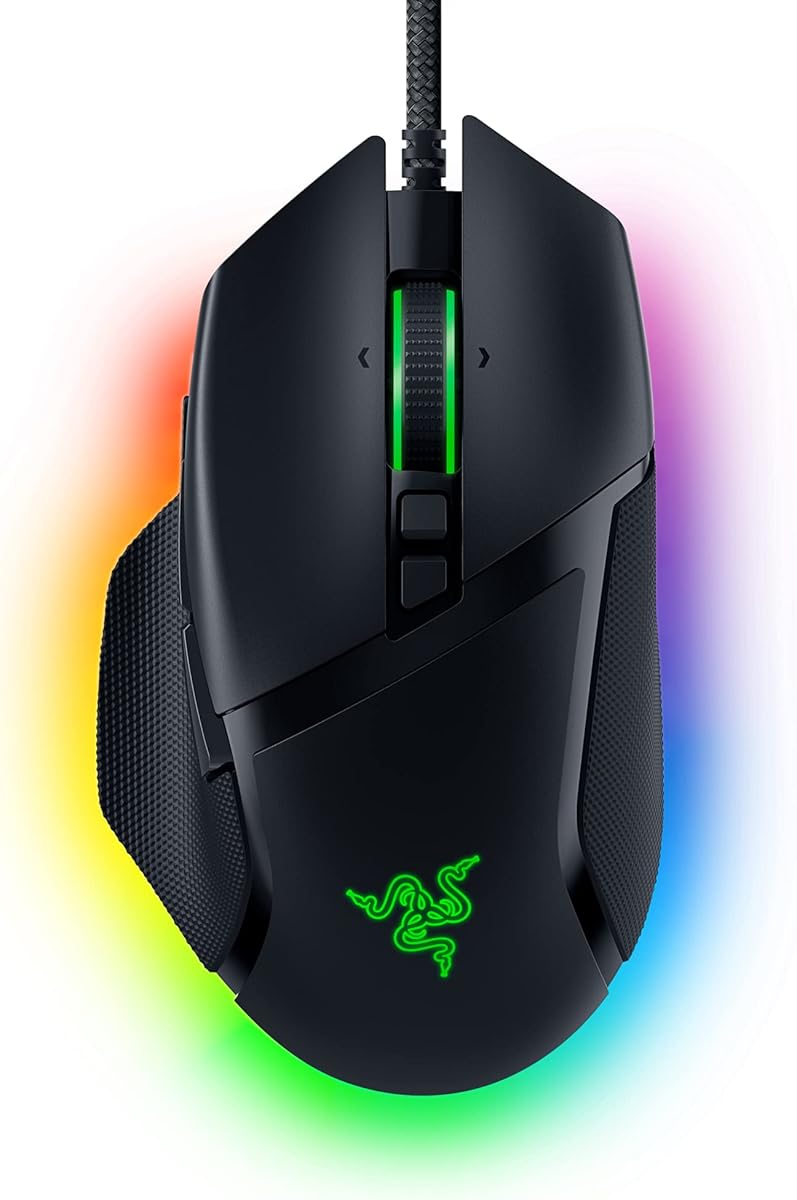
The Razer Basilisk V3 is still the reference wired ergonomic mouse for players who want a supportive right-hand shell and a control surface that goes far beyond left-click, right-click, and two side buttons. The iconic thumb rest and button placement remain the reason millions of players stick with the Basilisk family through successive sensor upgrades. In the under-one-hundred field, it frequently lands as the comfort pick for medium and large hands that palm or hybrid-grip through long sessions.

  • Focus+ 26K DPI sensor
  • 11 programmable buttons
  • HyperScroll tilt wheel
Check Price →
✓ Pros
  • Thumb-rest ergonomics remain one of the most comfortable right-hand shapes
  • Eleven buttons cover MMO, browser, and creative macros without stretching
  • Optical Gen-2 switches deliver fast actuation with strong misclick resistance
  • HyperScroll free-spin and tactile modes adapt to browsing versus weapon cycling
  • Dense Chroma zones make synchronized RGB desks look intentional
✕ Cons
  • Wired-only design will frustrate pure wireless desk builders
  • Heavier and taller than ultralight ambidextrous shells
  • Synapse dependency for full customization may annoy minimalist setups

Detailed review

Focus+ optical sensing at up to twenty-six thousand DPI brings intelligent tracking features and zero-smoothing response when you calibrate correctly. Combined with optical mouse switches Gen-2 that claim zero unintended misclicks and roughly zero-point-two-millisecond actuation, the Basilisk V3 feels decisive in both clicky FPS taps and ability-weaving ARPG combat. Eleven programmable buttons mean push-to-talk, ping, grenade utilities, or timeline shortcuts in editing software can live under the thumb and finger cluster without modifier gymnastics.

HyperScroll is more than a gimmick. Free-spin mode rockets through long documents, loot filters, and web research between matches. Tactile mode restores notch-by-notch feedback for weapon or skill cycling when precision matters more than speed. The tilt functions add lateral binds that power users map to horizontal navigation or secondary abilities. Few mice in this pack give you that much scroll personality out of the box.

Chroma lighting across eleven zones is the flashiest presentation piece here. If your keyboard and headset already speak Chroma, the Basilisk V3 becomes a visual anchor rather than a lonely glowing logo. Players who hate RGB can tone effects down or off in Synapse, though the shell’s sculpted aesthetic still reads as a dedicated gaming peripheral even with lights disabled. Rubberized contact points and the overall mass make the mouse feel planted; that is a feature for control-oriented aim and a drawback if you chase sub-sixty-gram flick culture.

Software is both strength and friction. Synapse unlocks remaps, hypershift layers, and cloud profiles, yet it is heavier than some competitors and requires an account workflow many competitive purists dislike. Once profiles are saved, the mouse becomes a reliable daily driver for mixed work and play. Disable Windows pointer acceleration, set a comfortable DPI, and spend an evening assigning the side cluster before judging the shape—button maps change how the Basilisk feels as much as the hump height does.

Pick the Basilisk V3 when comfort, button count, and wired reliability matter more than ultralight mass. It is an outstanding MMO, MOBA, and productivity-hybrid mouse, and still fully capable in shooters if you accept a heavier, more sculpted shell. If your priority is pure wireless competitive weight, look at the Viper V3 HyperSpeed or ATTACK SHARK X3 instead. If you love this shape but need a cord-free desk, jump to the Basilisk V3 X HyperSpeed later in this guide.

Best genres for the Basilisk V3

MMOs, survival crafters, MOBAs, and strategy titles benefit most from the dense control layout. FPS players with palm grips who prefer controlled tracking over frantic fingertip flicks also do well. Creative work that needs horizontal scroll binds and browser back buttons is a quiet secondary use case.

Ergonomics and hand size notes

The thumb rest and tall rear hump favor medium to large right hands. Small-handed claw players may find the shell oversized and should demo a lighter symmetrical mouse when possible. Left-handed users should look elsewhere in the pack toward ambidextrous shapes like the X3 or Viper.

Check Price on Amazon →

We may earn a commission at no additional cost to you.

3. Logitech G502 HERO - Best Adjustable Classic

Logitech G502 HERO

Logitech G502 HERO

9.2/10★★★★★

The Logitech G502 HERO is the perennial recommendation for a reason: it packs a serious sensor, a deep button layout, and a rare weight-tuning system into a shape that countless players already know by muscle memory. In an under-one-hundred roundup that includes flashier wireless successors, the wired HERO still earns a seat because it is proven, feature-dense, and easy to recommend to someone upgrading from a generic office mouse who wants every control under the fingers on day one.

  • HERO sensor to 25,600 DPI
  • Up to five adjustable weights
  • 11 buttons with onboard memory
Check Price →
✓ Pros
  • HERO sensor remains a benchmark for consistent, unsmoothed tracking
  • Weight tuning system lets you bias the mouse heavier or lighter
  • Eleven programmable buttons with onboard memory for software-free PCs
  • Dual-mode hyper-fast scroll is excellent for work and game swapping
  • Metal spring tensioning on primary clicks delivers a confident feel
✕ Cons
  • Stock weight can feel bulky next to modern ultralights
  • Shape is polarizing for aggressive claw and fingertip grips
  • Wired cable is fine but less refined than newer paracord-style leads

Detailed review

HERO sensing up to twenty-five thousand six hundred DPI with zero smoothing, filtering, or acceleration is the technical foundation. Sub-micron tracking claims sound abstract until you notice how cleanly micro-adjustments land on a four-hundred DPI aim trainer routine. Most buyers will never need the ceiling DPI; what they need is linear, predictable response across ordinary sensitivity ranges, and that is where HERO continues to shine years after launch.

The adjustable weight tray is the G502’s personality trait. Up to five three-point-six-gram weights let you chase a planted tracking feel or strip mass for snappier direction changes. That flexibility is unique in this pack and valuable if multiple people share a PC or if you are still discovering whether you prefer inertia or agility. Pair that with eleven programmable buttons and a dual-mode scroll wheel, and the mouse covers everything from sniper DPI clutch binds to spreadsheet marathon scrolling.

Primary click feel benefits from mechanical switch button tensioning with metal spring systems and metal pivot hinges. The result is a crisp, rapid click that many longtime G502 owners refuse to give up even when they try lighter shells. LIGHTSYNC RGB adds customizable lighting that can sync with supported games through Logitech software. Onboard memory means you can carry a tuned profile to a LAN or campus lab without installing a full suite on a locked-down machine.

The shape is the permanent debate. Palm and relaxed claw users often praise the sculpted right-hand form. Strict fingertip flick players migrating from fifty-gram mice may call it a boat. Neither camp is wrong; they are optimizing for different biomechanics. If you already loved older G502 generations, the HERO update is a safe sensor-forward continuation. If you have never tried the shape, treat hand-size fit as a higher priority than the feature checklist.

Buy the G502 HERO when you want maximum wired utility and the option to tune heft. Consider the G502 X Plus in this same guide if wireless, optical-mechanical switches, and a modernized shell matter more. Consider the Basilisk V3 if you prefer Razer’s thumb-rest ergonomics and HyperScroll personality. The HERO remains the classic workhorse that still justifies its reputation inside a modern under-one-hundred shortlist.

Weight tuning strategy

Start with no weights for a week of aim training, then add mass only if your tracking feels floaty on wide arm swipes. Many FPS players settle near the lighter end, while strategy and MMO players often prefer more inertia. Change one variable at a time so you know what improved your consistency.

When to choose HERO over G502 X Plus

Choose the wired HERO if you never want battery anxiety, prefer the older weight system, or want the familiar classic shell without paying into the newer wireless stack. Choose X Plus when LIGHTSPEED, LIGHTFORCE switches, and POWERPLAY-ready charging are part of your desk plan.

Software and onboard profiles

Use Logitech software to build DPI steps, RGB, and button maps, then store a profile onboard before traveling. That workflow is especially useful for students and cafe competitors who bounce between machines.

Check Price on Amazon →

We may earn a commission at no additional cost to you.

4. Razer Viper V3 HyperSpeed - Best Competitive Wireless

Razer Viper V3 HyperSpeed

Razer Viper V3 HyperSpeed

9/10★★★★★

The Razer Viper V3 HyperSpeed targets players who want wireless freedom without the maintenance cycle of short-lived rechargeable packs. An included AA cell and claims of up to two hundred eighty hours of high-performance play mean you can grind ranked nights for a long stretch before thinking about power. For tournament travelers and LAN warriors, swapping a fresh cell can be faster than hunting a USB port mid-bracket.

  • Focus Pro 30K optical sensor
  • 82g mass-central design
  • Up to 280 hours on AA
Check Price →
✓ Pros
  • Focus Pro 30K sensor with forward placement and strong surface flexibility
  • Mass-centralized 82g shell feels balanced for competitive swipes
  • HyperSpeed wireless stays stable in crowded two-point-four-gigahertz rooms
  • AA power delivers marathon battery life without hunting proprietary chargers
  • On-mouse DPI control makes sensitivity changes simple mid-session
✕ Cons
  • Only six programmable buttons limits MMO-style bind density
  • AA battery adds a disposable or rechargeable-cell routine some dislike
  • Ambidextrous competitive shape is less cushioning for pure palm grippers

Detailed review

At eighty-two grams with a mass-centralized layout, the Viper V3 HyperSpeed aims for consistent swipe feel rather than chasing the absolute lowest number on a scale. Competitive players often care more about balance than shaving five more grams, and Razer’s design language here reflects that. The shell stays ambidextrous and relatively low-profile, favoring claw and fingertip grips while remaining usable for lighter palm contact on medium hands.

Focus Pro optical sensing up to thirty thousand DPI is a clear step up from older midrange sensors in Razer's value wireless lineup. Forward sensor placement and intelligent functions help maintain accuracy across varied pads, including trickier surfaces where lesser sensors spin out. You still should pair it with a quality cloth or hybrid pad and disable OS acceleration, but the headroom is reassuring if you bounce between dorm desks and arena tables.

HyperSpeed wireless is the connection story. Low-latency performance in noisy wireless environments matters in apartments packed with routers, phones, and USB three ports. Multi-device support can streamline a desk that already uses other HyperSpeed peripherals. Mechanical mouse switches Gen-2 with gold-plated contacts and a sixty-million-click rating keep primary clicks crisp; they are not optical switches like the Cobra or Basilisk V3, so the click character feels different—more traditional mechanical snap than optical dead-silent speed.

Button count is intentionally lean at six programmable controls. That is plenty for FPS utilities and a few productivity shortcuts, but it will not replace a Basilisk for twelve-skill bars. On-mouse DPI toggling across five stages is convenient for players who swap between desktop navigation and low-sens aim without opening software every time. Synapse remains the deep customization path for remaps and finer sensor tuning.

This is the pack’s best fit for competitive wireless players who prioritize sensor pedigree, HyperSpeed stability, and marathon AA endurance over ultralight records or dense side clusters. If you want rechargeable convenience and a sub-fifty-gram shell, the ATTACK SHARK X3 is the contrasting pick. If you need the Basilisk shape wirelessly, move to the Basilisk V3 X HyperSpeed instead.

AA battery practicality

Use a high-quality lithium AA for lighter weight and long storage life, or keep a pair of rechargeable NiMH cells in rotation. Label a spare in your bag for events so a dead cell never ends a night. Battery life claims assume typical lighting and polling conditions; RGB-heavy Synapse effects and constant high polling can shorten real-world endurance.

Who will prefer a different Viper-class alternative

Players who hate battery swaps should consider rechargeable options like the X3 or G502 X Plus. Players who need more side buttons should look at Basilisk models. Players who want optical switches specifically may prefer the Cobra or Basilisk V3 wired.

Check Price on Amazon →

We may earn a commission at no additional cost to you.

5. Razer Cobra - Best Lightweight Wired

Razer Cobra

Razer Cobra

9/10★★★★★

The Razer Cobra is the lightweight wired answer for players who want modern mass and optical switches without managing batteries. At fifty-eight grams, it sits close to the ultralight conversation while keeping a simple cable tether that never drops a wireless packet. For many bedroom setups, that trade is ideal: you get aggressive aiming feel and Chroma flair while avoiding dongle clutter.

  • 58g lightweight chassis
  • Gen-3 optical switches
  • 8500 DPI with PTFE feet
Check Price →
✓ Pros
  • Fifty-eight-gram shell makes wired flick aiming feel modern
  • Gen-3 optical switches target a ninety-million click lifespan
  • Speedflex cable reduces the tug that ruins micro-adjustments
  • Underglow Chroma looks vivid without needing a wireless tax
  • Fifty DPI adjustment steps help dial an exact sensitivity
✕ Cons
  • Eight thousand five hundred DPI ceiling trails flagship sensors in this pack
  • Fewer buttons than Basilisk and G502 models
  • Wired-only design cannot match HyperSpeed desk freedom

Detailed review

Gen-3 optical mouse switches are a major reason to shortlist the Cobra. The extended lifecycle rating and debounce-free optical actuation are aimed at eliminating classic double-click failures that haunt aging mechanical microswitches. A claimed zero-point-two-millisecond actuation keeps taps feeling immediate in twitch shooters and rhythm-adjacent click timing. If you have lost a favorite mouse to double-clicking, this generation of optical switches is a practical upgrade path.

Sensor tuning tops out at eight thousand five hundred DPI with fine fifty DPI increments. That is less headline theater than the twenty-six and thirty thousand DPI flagships nearby, yet it remains more than enough for conventional gaming sensitivities. What matters is clean tracking and the ability to land on an exact step that matches your cm/360 target. Pair the Cobra with a consistent pad and you will not feel handicapped relative to higher-DPI siblings in normal play.

Build details support the lightweight brief. One hundred percent PTFE feet on the front, rear, and sensor ring keep glide smooth across cloth and many hybrids. The Speedflex cable is designed to minimize drag so wide arm swipes do not fight a stiff rubber lead. Chroma lighting with gradient underglow gives the shell a presence that photographs well and syncs with other Chroma gear when you want a coordinated desk.

Grip versatility is broader than ultra-narrow esports shells. Razer positions the Cobra for most grip styles, and medium hands in claw or relaxed fingertip stances tend to adapt quickly. Large deep-palm users may still prefer the Basilisk’s thumb rest. Button count stays modest compared with eleven-button flagships, which keeps the top shell clean for pure aiming but limits macro-heavy genres.

Choose the Cobra when you want a light wired daily driver with durable optical clicks and vivid underglow. Skip it if you need wireless, a dense side-button cluster, or the absolute highest sensor ceiling for bragging rights. Inside this pack it pairs naturally as the wired counterpart to the ATTACK SHARK X3’s ultralight wireless story.

Cable management for low drag

Use a modest bungee or route the Speedflex with a gentle arc from monitor stand to pad so the cable never yanks during horizontal flicks. A clean path matters more on a fifty-eight-gram mouse because small tugs are easier to feel.

Cobra versus Rival 3 Gen 2

Both chase lightweight wired play. The Cobra emphasizes optical Gen-3 switches, Chroma underglow, and Razer’s software world. The Rival 3 Gen 2 emphasizes SteelSeries’ TrueMove Core sensor story, claimed click latency, and a seventy-seven-gram shell with mesh paracord. Pick based on ecosystem and which shape fits your hand better.

Check Price on Amazon →

We may earn a commission at no additional cost to you.

6. Razer Basilisk V3 X HyperSpeed - Best Wireless Basilisk

Razer Basilisk V3 X HyperSpeed

Razer Basilisk V3 X HyperSpeed

8.8/10★★★★☆

The Basilisk V3 X HyperSpeed exists for people who loved the Basilisk shape and refused to go back to a cable. It keeps the signature ergonomic support and easy-access button philosophy while adding Razer HyperSpeed wireless and a Bluetooth fallback for laptops and living-room PCs. In an under-one-hundred shopping context, that combination of comfort and cordless flexibility is hard to ignore for right-handed hybrid users.

  • 18K 5G optical sensor
  • HyperSpeed and Bluetooth
  • Up to 285 hr wireless
Check Price →
✓ Pros
  • Familiar Basilisk ergonomics without a cable leash
  • HyperSpeed plus Bluetooth covers gaming and multi-device productivity
  • Long battery life claims reduce charge frequency dramatically
  • Nine programmable controls keep macros close for hybrid play
  • Chroma support maintains Razer desk cohesion
✕ Cons
  • Eighteen thousand DPI 5G sensor trails Focus+ and Focus Pro siblings
  • Mechanical Gen-2 switches are not optical Gen-2/Gen-3 units
  • Slightly fewer controls than the wired Basilisk V3’s eleven buttons

Detailed review

Battery endurance is a standout talking point. Claims of up to two hundred eighty-five hours on HyperSpeed and even longer on Bluetooth mean the mouse is built for people who forget chargers exist. Real-world results vary with lighting and usage, yet the design intent is clear: this is a long-shift peripheral, not a nightly recharge ritual. Multi-device support further helps if you already run compatible Razer wireless gear.

The Razer 5G advanced eighteen thousand DPI optical sensor is capable and reliable for mainstream gaming, even if it is not the Focus+ twenty-six thousand or Focus Pro thirty thousand hardware found on higher Basilisk and Viper models in this pack. Pixel-precise tracking with zero spinouts is the practical promise. Most players will be limited by technique and pad choice long before they hit the sensor’s ceiling.

Nine programmable controls sit between sparse esports mice and the fuller eleven-button wired Basilisk V3. That is enough for serious utility mapping without matching every bind the wired sibling offers. Mechanical mouse switches Gen-2 with gold-plated contacts target a sixty-million-click lifespan and consistent actuation, though players specifically hunting optical switch benefits should note the difference and consider the wired Basilisk V3 or Cobra.

Chroma RGB keeps the aesthetic linked to the rest of a Razer kit, and Synapse remains the configuration hub. The ergonomic form still favors right-handed palm and hybrid grips; left-handed players and strict ultralight fingertip aimers should look at ambidextrous options instead. As a wireless comfort mouse for mixed FPS, live-service grinders, and work browsing, the V3 X HyperSpeed is one of the most practical cordless shapes in the pack.

Buy it when Basilisk comfort plus wireless endurance is the brief. Choose the wired Basilisk V3 if you want HyperScroll, more buttons, Focus+ sensing, and optical switches. Choose the Viper V3 HyperSpeed if competitive balance and a higher-end sensor matter more than the thumb-rest lifestyle shape.

Bluetooth versus HyperSpeed day to day

Use HyperSpeed for any latency-sensitive game and reserve Bluetooth for lecture notes, travel laptops, and couch browsing. Switching modes intentionally prevents you from accidentally competing on the higher-latency path during ranked nights.

Fit check before buying

If a wired Basilisk already fits your hand, the V3 X HyperSpeed is a low-risk wireless translation. If you have never liked Basilisk height or thumb placement, wireless will not fix a shape mismatch—demo an ambidextrous shell instead.

Check Price on Amazon →

We may earn a commission at no additional cost to you.

7. G57 Wireless Gaming Mouse - Best Multi-Device Flex

G57 Wireless Gaming Mouse

G57 Wireless Gaming Mouse

8.8/10★★★★☆

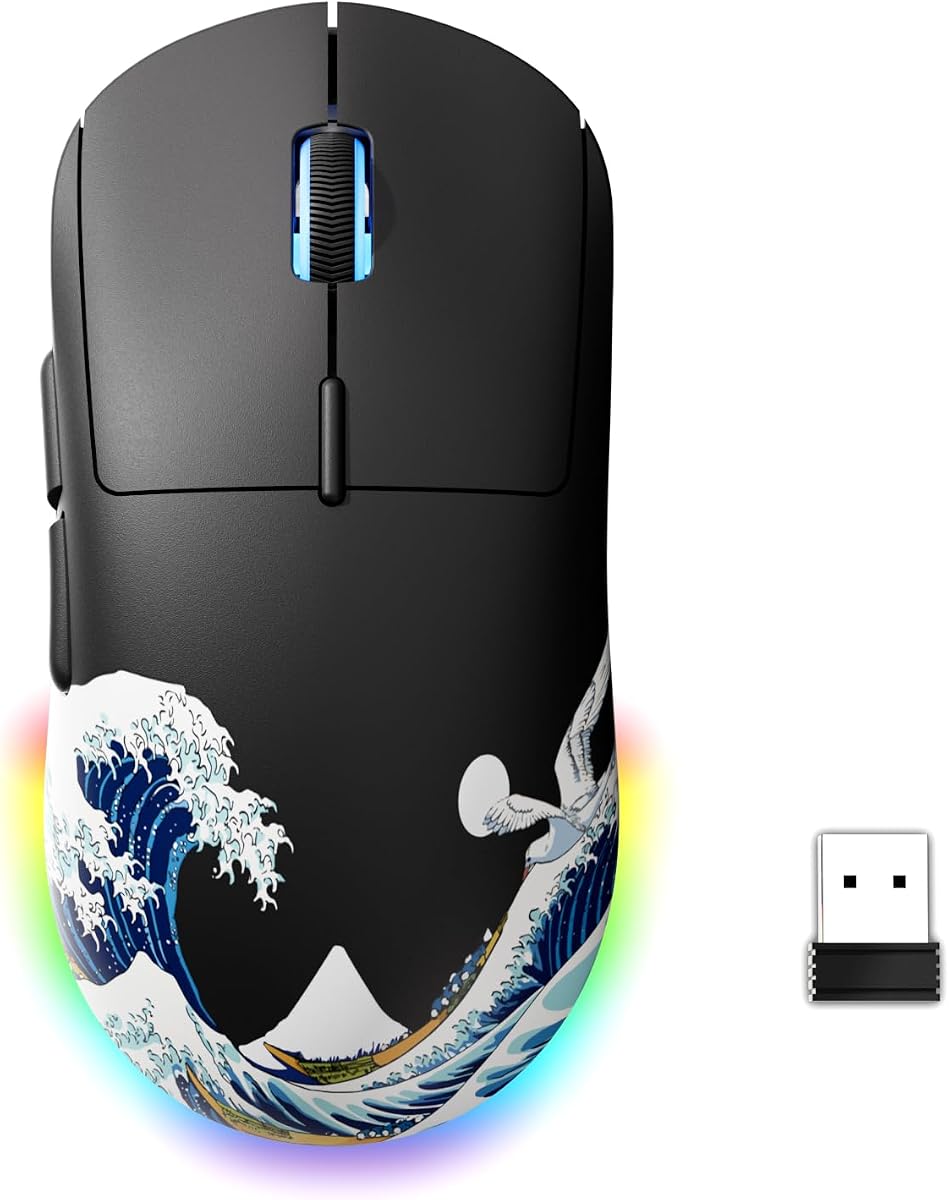
The G57 Wireless Gaming Mouse is the practical multi-device pick in this pack. Tri-mode connectivity—two-point-four-gigahertz wireless, Bluetooth, and wired USB-C—means one shell can follow you from a gaming desktop to a MacBook study session without buying a second mouse. At roughly eighty grams it is not an ultralight trophy, but it is light enough for casual competitive play and comfortable for long browser and document days.

  • Tri-mode 2.4G / BT / USB-C
  • 800–8000 DPI with indicators
  • 80g rechargeable shell
Check Price →
✓ Pros
  • Tri-mode connectivity adapts to dorm, office, and living-room PCs
  • USB-C rechargeable design avoids disposable cell runs
  • Six DPI steps with color indicators make changes obvious at a glance
  • Cross-platform support covers Windows and macOS workflows
  • Smart sleep behavior stretches battery between active sessions
✕ Cons
  • Sensor and switch pedigree sit below PAW3395 and Focus Pro options
  • Five programmable buttons limit deep macro layouts
  • Software and brand ecosystem are lighter than Logitech or Razer suites

Detailed review

DPI flexibility spans eight hundred to eight thousand across six levels, each with a color indicator so you can see which step is active without opening a settings panel. That visual feedback is genuinely useful for households where multiple people share a machine and keep changing sensitivity. Wired mode’s one-thousand-hertz polling path is the right choice when you sit down for a serious match and want maximum responsiveness from the same hardware.

Bluetooth pairing is straightforward: long-press the mode button, connect in the OS, and optionally juggle two Bluetooth channels for fast device switching. Students and hybrid workers who hop between a campus laptop and a home PC will appreciate that more than pure esports athletes who leave one dongle in a rear USB port forever. Automatic sleep after short inactivity, then deeper sleep later, helps the rechargeable pack last through irregular schedules.

Battery UX includes real-time level tracking in software, blink warnings when low, and clear red-to-green charging cues over USB-C. Those details matter more in daily life than another thousand DPI on a spec sheet. The G57 will not embarrass a mid-tier sensor in casual FPS or live-service games, yet aim trainers chasing absolute sensor consistency may still prefer the ATTACK SHARK X3 or Razer Viper V3 HyperSpeed.

Five programmable buttons cover the essentials—side navigations, DPI clutch, and a couple of macros—without pretending to be an MMO deck. Cross-platform compatibility with a wide Windows range and macOS ten-point-five and newer keeps the mouse useful outside a single gaming tower. Finish and styling are understated black, which blends into office desks better than aggressive honeycomb racers.

Pick the G57 when flexibility and rechargeable convenience outrank flagship sensor branding. It is a strong dorm and travel companion inside this under-one-hundred set. If your only PC is a tuned gaming rig and you care about every gram and every sensor footnote, spend your attention on the X3, Viper V3 HyperSpeed, or G502 X Plus instead.

Ideal user profile

Hybrid students, remote workers who game after hours, and anyone maintaining two or three computers will get the most from tri-mode switching. Pure competitive specialists with one desktop should prioritize higher-end sensors elsewhere in the pack.

Power habits that maximize uptime

Plug into USB-C during lunch or shower breaks when the low-battery blink appears instead of waiting for a hard shutdown mid-raid. Keep wired mode as a hot spare during long tournament streams so a missed charge never becomes an excuse.

Expectations versus premium wireless

The G57 competes on versatility, not on matching PAW3395 or HERO 25K prestige. Judge it as a flexible daily mouse that can game, not as a tournament main for players already optimizing pads, eDPI, and click latency charts.

Check Price on Amazon →

We may earn a commission at no additional cost to you.

8. Razer DeathAdder Essential - Best First Upgrade

Razer DeathAdder Essential

Razer DeathAdder Essential

9/10★★★★★

The Razer DeathAdder Essential is the straightforward on-ramp into gaming mice for players who know they hate their office pebble but are not ready to decode honeycomb shells, eight thousand Hertz polling debates, or twelve-button macro matrices. The DeathAdder silhouette remains one of the most recognizable right-hand ergonomic curves in PC gaming, and the Essential trim keeps that comfort while stripping the experience down to sensible essentials.

  • 6,400 DPI optical sensor
  • Five programmable buttons
  • Rubberized side grips
Check Price →
✓ Pros
  • Classic DeathAdder comfort curve is easy for new right-handed gamers
  • Simple five-button layout avoids overwhelming first-time Synapse users
  • Rubber side grips improve control during sweaty sessions
  • Wired reliability with no battery planning required
  • Strong value stepping stone from a stock office mouse
✕ Cons
  • Six thousand four hundred DPI and older feature set trail modern pack leaders
  • Mechanical switches are rated lower than optical Gen-3 lifespans
  • No wireless option and limited RGB spectacle compared with siblings

Detailed review

A six thousand four hundred DPI optical sensor with on-the-fly DPI buttons covers gaming and creative work without drowning you in unused ceiling values. Five programmable buttons are enough for weapon abilities, browser navigation, and a push-to-talk bind once Synapse is installed. The ridged rubberized scroll wheel adds tactile control that helps when you are cycling inventory under pressure instead of free-spinning through a webpage.

Mechanical switches rated around ten million clicks are adequate for many years of normal play, though they are not the longevity story told by optical Gen-3 hardware on the Cobra or the eighty-million-click claims on the ATTACK SHARK X3. Rubber side grips are a quiet highlight: they stabilize the shell when hands get slick and make the Essential feel more secure than glossy budget plastics. As a wired mouse, it also removes an entire category of anxiety for younger players or shared household PCs.

You should be honest about what this mouse is not. It will not win a sensor whitepaper fight against Focus Pro or PAW3395 models. It will not satisfy MMO veterans who want a dense thumb cluster. It will not satisfy ultralight converts who measure happiness in grams. What it will do is feel immediately more precise and comfortable than a generic OEM mouse, which is the actual problem most first-time upgraders need solved.

Synapse support still lets you remap and assign macros when you grow into that complexity. Until then, the Essential works fine as a plug-and-play bump in control. For parents buying a first real gaming peripheral, or for other budget seats in a multi-PC home, that simplicity is a feature. Pair it with a basic medium cloth pad and disable enhance pointer precision for an instant improvement in aim predictability.

Recommend the DeathAdder Essential when the buyer needs an ergonomic wired starter with a trusted shape. Guide more experienced players toward the Basilisk V3, Cobra, Viper V3 HyperSpeed, or G502 family depending on whether comfort, weight, wireless, or buttons dominate the wishlist. Inside this pack, the Essential is the clearest “first serious mouse” story.

Upgrade path after the Essential

If you outgrow DPI range and want more buttons, the Basilisk V3 is the natural Razer step. If you fall in love with aiming and want less weight, try the Cobra or ATTACK SHARK X3. If you decide wireless is mandatory, the Viper V3 HyperSpeed or Basilisk V3 X HyperSpeed keep you in the same brand comfort zone.

Who should skip straight past it

Anyone already using a midrange gaming mouse, anyone chasing competitive ultralight metas, and anyone who specifically wants optical switches or multi-device wireless should start higher in this list rather than treating the Essential as a temporary compromise.

Check Price on Amazon →

We may earn a commission at no additional cost to you.

9. Logitech G502 X Plus - Best Overall Wireless

Logitech G502 X Plus

Logitech G502 X Plus

9/10★★★★★

The Logitech G502 X Plus is the premium wireless expression of the most iconic feature mouse lineage in PC gaming. It redesigns the G502 idea around LIGHTFORCE hybrid optical-mechanical switches, LIGHTSPEED wireless, denser RGB, and modern power options including USB-C and POWERPLAY wireless charging capability. In an under-one-hundred guide, it often represents the ceiling of what you can grab without stepping into higher enthusiast brackets reserved for specialized esports shells.

  • LIGHTFORCE hybrid switches
  • HERO 25K + LIGHTSPEED
  • 13 buttons, POWERPLAY capable
Check Price →
✓ Pros
  • LIGHTFORCE optical-mechanical switches blend speed with satisfying feedback
  • LIGHTSPEED wireless feels pro-grade for serious desktop play
  • HERO 25K sensor continues Logitech’s high-precision tracking reputation
  • Thirteen buttons and dual-mode scroll cover work and every genre
  • POWERPLAY compatibility enables charge-at-rest and charge-at-play workflows
✕ Cons
  • Heavier feature-mouse philosophy will not please sub-fifty-gram purists
  • Full value appears when you invest time in G HUB configuration
  • Wireless charging base is sold separately if you want the complete stack

Detailed review

LIGHTFORCE switches are the tactile headline. Hybrid optical-mechanical design aims to deliver rapid, reliable actuation with a crisp response that still feels like a real click rather than a muted optical thud. That matters for players who spam abilities for hours and still want feedback that confirms every press. Thirteen buttons, including a reversible and removable DPI-shift control, let you tailor the layout to palm width and thumb reach instead of accepting a fixed hump of plastics.

HERO twenty-five thousand DPI sensing with zero smoothing, filtering, or acceleration anchors aim quality. LIGHTSPEED wireless updates the response story with a faster protocol than prior generations and stronger reliability for demanding play. Battery life under one hundred thirty hours depending on use, with LIGHTSYNC RGB that can adapt and optimize during play detection, keeps the mouse practical for long seasons rather than weekend demos. USB-C charging covers the everyday case; POWERPLAY support is the power-user upgrade path for never thinking about cables again.

The dual-mode scroll wheel still may be the most beloved G502 quality-of-life feature. Infinite free spin blasts through timelines and loot tabs; ratcheting mode restores precise steps for weapon selection. Tilt inputs add two more personalizable controls. Eight-LED LIGHTSYNC lighting with startup and power-down effects makes the X Plus a showpiece without forcing you to live in rainbow mode forever—effects can be tuned or minimized in software.

Shape remains G502 at heart: sculpted, right-handed, and control-oriented rather than ultralight ambidextrous. If that family never fit your grip, the X Plus will not magically convert you. If you have been waiting for the classic layout to go properly wireless with modern switches, this is the pack’s clearest fulfillment of that wish. Compared with the wired G502 HERO, you gain cordless freedom and newer switch tech while leaving behind the classic adjustable weight tray philosophy.

Make the G502 X Plus your top pick when you want the richest wireless feature set in this pack and already know you like a heavier, button-rich shell. Choose the ATTACK SHARK X3 or Viper V3 HyperSpeed when competitive mass and simpler control clusters matter more. Choose the wired Basilisk V3 when you want Razer's thumb-rest comfort and do not need wireless at all.

Building a G502 X Plus desk

Pair it with a large cloth pad that gives your arm room, keep the LIGHTSPEED receiver on a short extender if your USB ports sit in a noisy cluster, and decide early whether POWERPLAY is part of the endgame. Even without the charging pad, USB-C top-ups are painless if you dock the mouse during breaks.

DPI-shift customization tips

Try the DPI-shift button in both orientations before you commit to a layout, and remove it entirely if your grip collides with the post. Many players remap the shift to sniper hold rather than cycling DPI steps mid-fight.

X Plus versus Basilisk V3 X HyperSpeed

Pick X Plus for LIGHTFORCE switches, HERO 25K, denser controls, and Logitech’s wireless charging story. Pick Basilisk V3 X HyperSpeed for Razer's ergonomic thumb-rest feel, very long battery claims, and a lighter configuration burden if you already live in Synapse.

Check Price on Amazon →

We may earn a commission at no additional cost to you.

10. SteelSeries Rival 3 Gen 2 - Best Budget Speed

SteelSeries Rival 3 Gen 2

SteelSeries Rival 3 Gen 2

8.4/10★★★★☆

The SteelSeries Rival 3 Gen 2 is the pack’s lightweight wired speed specialist from a brand that still carries serious credibility in competitive peripherals. It does not try to out-button a G502 or out-zone a Basilisk V3. Instead it leans on click latency claims, TrueMove Core tracking, a seventy-seven-gram shell, and a flexible mesh cable to deliver a focused aiming instrument for players who want SteelSeries software and lighting in a reachable shopping tier.

  • TrueMove Core 8500 DPI
  • 77g with PTFE feet
  • 1.35ms click latency claim
Check Price →
✓ Pros
  • Claimed one-point-three-five-millisecond click latency targets snappy taps
  • TrueMove Core sensor focuses on true one-to-one tracking feel
  • Seventy-seven-gram shell with PTFE feet stays agile on cloth pads
  • Super mesh paracord-style cable reduces drag versus stiff leads
  • Three-zone RGB adds personality without a wireless premium
✕ Cons
  • Lower aggregate rating than most pack peers warrants a careful fit check
  • Feature set is simpler than G502 and Basilisk flagship trims
  • Wired-only design and modest button count limit hybrid power users

Detailed review

Faster-than-ever messaging centers on a near-instant one-point-three-five-millisecond click latency figure. Marketing latency numbers are always contextual, yet the intent is clear: this mouse is tuned for responsive taps rather than luxury feature sprawl. Sixty-million-click durability ratings on the switches support the idea that the Rival 3 Gen 2 is meant to be used hard in ranked queues, not babied as a display piece.

TrueMove Core optical sensing at eight thousand five hundred DPI emphasizes accurate reflection of hand movement for shot placement. Like other eight-point-five-thousand-class sensors in this guide, it is ample for standard eDPI setups. SteelSeries’ tuning philosophy historically prizes consistency and truthfulness in sensor response, which aim trainers and low-sens players tend to appreciate once Windows acceleration is disabled and a stable DPI step is locked.

At seventy-seven grams with one hundred percent PTFE feet, the Rival 3 Gen 2 sits in a comfortable lightweight band—heavier than the Cobra and X3, lighter than classic feature bricks. The super mesh paracord-style cable is a meaningful quality-of-life upgrade over stiff rubber cords that tug mid-flick. Three-zone RGB gives the shell enough presence to match a SteelSeries keyboard or headset without turning the mouse into a disco floor.

The more modest shopper rating in this pack is a signal to buy for fit and purpose rather than hype. Some users will wish for more side buttons or wireless. Others will find the shape less forgiving than DeathAdder or Basilisk comfort curves. Read recent owner notes about your hand size and grip style, and be willing to return if the hump height is wrong—lightweight potential only helps when the shell actually locks into your fingers.

Choose the Rival 3 Gen 2 when you want a SteelSeries-centered lightweight wired mouse with a latency-first story and simple RGB. Choose the Razer Cobra if optical Gen-3 switches and stronger Chroma underglow matter more. Choose any wireless option above if cutting the cord is non-negotiable. As a tenth pack entry it rounds out the guide with a credible alternative ecosystem instead of another recolored mega-brand clone.

SteelSeries software expectations

GG software handles lighting, CPI steps, and button remaps. It is a different workflow from Synapse and G HUB, so budget a short setup evening if you are migrating brands. Save a simple profile before you start tweaking RGB so you always have a clean competitive baseline to restore.

Best matched playstyles

Claw and fingertip FPS players on a medium pad, casual competitive students, and SteelSeries desk builders who want visual matching will like this mouse most. Macro-heavy MMO grinders should look at Basilisk or G502 options instead.

Check Price on Amazon →

We may earn a commission at no additional cost to you.

Best Gaming Mouse Under 100 in 2026: Wired and Wireless

How to Choose a Gaming Mouse Under One Hundred

Start with grip and hand size, not DPI theater

A twenty-six thousand DPI sensor cannot fix a shell that twists in your fingers. Trace your hand on paper, note length and width, and be honest about palm, claw, or fingertip posture during a real deathmatch—not during a static desk photo. Large palm grippers usually thrive on Basilisk and G502 shapes. Medium claw and fingertip players often prefer Viper, Cobra, Rival 3, or ATTACK SHARK X3 shells. If you are between sizes, prioritize the shape you can control after forty minutes, when fatigue reveals pressure points marketing copy ignores.

Wired versus wireless in this price lane

Modern HyperSpeed and LIGHTSPEED links in this pack are good enough for nearly all ranked play at home. Choose wireless when your desk is clean, you travel between machines, or cable tug breaks your aim. Choose wired when you want zero battery planning, maximum simplicity for a household PC, or you are buying a first mouse and refuse another device to charge. Tri-mode mice like the X3 and G57 are the compromise for people who refuse to own two peripherals.

Sensor ceilings versus real sensitivity

Most aiming improvement comes from a stable DPI step, disabled OS acceleration, and a consistent cm/360—not from chasing the highest marketed DPI. Flagship sensors still matter for spinout resistance, lift-off behavior, and high-speed tracking fidelity. That is why PAW3395, Focus Pro, Focus+, and HERO units earn attention here. An eight thousand five hundred DPI sensor remains completely viable when the implementation is clean and your technique is sound.

Buttons, scroll wheels, and genre fit

FPS mains can live with six well-placed buttons. MMO, survival, and productivity hybrids should prioritize nine to thirteen controls and consider HyperScroll or dual-mode wheels. Do not buy a twelve-button mouse “just in case” if the extra plastics shove your ring finger into an awkward flare—unused buttons that hurt ergonomics are not free value.

Switches, feet, cables, and software ecosystems

Optical switches reduce debounce delay and historically fight double-click failures; mechanical and hybrid designs can still feel fantastic and last a long time when well implemented. PTFE feet and flexible cables or clean wireless matter every session. Software is the long-term relationship: Synapse, G HUB, SteelSeries GG, and lighter third-party tools each have quirks. Prefer the ecosystem you already use if your keyboard and headset are deeply integrated, unless a rival shape is dramatically better for your hand.

Weight classes and when lighter stops helping

Sub-sixty-gram mice help flick-centric aimers and players with fatigue issues. Mid-seventy to mid-eighty-gram wireless competition mice can feel more planted for tracking-heavy titles. Classic feature mice above that range still win for comfort and controls. If your aim gets worse when you jump down twenty grams overnight, give yourself a week of aim trainers before declaring the light mouse a failure—or add a bit of deliberate control practice instead of instantly returning to a brick.

Frequently Asked Questions

01

Is a gaming mouse under one hundred actually enough for competitive play in 2026?

Yes for the vast majority of ranked ladder and casual tournament play. This pack includes PAW3395, Focus Pro, Focus+, and HERO sensors alongside modern wireless protocols that are more than capable when paired with a stable DPI, a good pad, and solid technique. What you may not get are niche eight-thousand-hertz polling flagships or ultra-limited esports shells, but those are optimization edges, not admission tickets to competitive gaming.

02

Should I prioritize weight or ergonomics first?

Ergonomics first if you play long sessions or already have wrist discomfort. Weight first if your sessions are aim-trainer heavy and your current mouse feels like it fights direction changes. The ideal is a shell that fits and also lands in a weight class you can control. A painful ultralight is worse than a slightly heavier mouse that disappears in your hand for five-hour raids.

03

Do I need twenty-six thousand DPI or thirty thousand DPI?

Almost certainly not as a literal polling of that ceiling. High DPI specs are headroom and marketing shorthand for sensor generation. What you need is clean tracking at the DPI you actually use—often four hundred to sixteen hundred—plus trustworthy behavior during fast swipes and lifts. Buy the sensor implementation quality, not the biggest number on the box.

04

Is wireless lag still a real problem?

On modern HyperSpeed, LIGHTSPEED, and competent two-point-four-gigahertz implementations in this pack, lag is rarely the limiting factor compared with your own consistency. Interference can still happen in hostile USB and Wi-Fi environments, which is why receiver placement matters. Bluetooth modes are for convenience, not for your most serious competitive playlist.

05

Which mouse in this guide is best for small hands?

Start with the ATTACK SHARK X3, Razer Cobra, and possibly the Rival 3 Gen 2 or Viper V3 HyperSpeed depending on width preference. Tall Basilisk and classic G502 shapes can overwhelm small hands, especially in claw grip. Whenever possible, compare dimensions to a mouse you already own rather than trusting a one-word size label.

06

Which mouse is best for MMO and productivity macros?

The Logitech G502 HERO, Logitech G502 X Plus, and Razer Basilisk V3 are the clear leaders for bind density and scroll versatility. The Basilisk V3 X HyperSpeed is the wireless comfort alternative with nine controls. Pure ambidextrous esports shells intentionally sacrifice that flexibility for aiming purity.

07

Are optical switches worth seeking out?

If you have suffered double-click failures or you want minimal debounce delay, optical switches on models like the Basilisk V3 and Cobra are compelling. Hybrid LIGHTFORCE switches on the G502 X Plus chase a middle path with strong feedback. Traditional mechanical switches on other models can still feel excellent; durability ratings and your click preference should decide more than brand slogans.

08

How should I set DPI when switching mice?

Measure your current cm/360 in a game you know, then tune the new mouse’s DPI and in-game sensitivity to match that distance before you judge the shape. Give yourself several aim-trainer sessions after matching, because unfamiliar shell balance can feel “off” even when the math is identical. Avoid changing DPI every death; lock a baseline for at least a week.

09

Can I use these mice on Mac?

Basic pointing usually works across the pack, and several listings explicitly call out Mac or macOS support. Deep RGB, macros, and onboard profile tools may be Windows-skewed depending on the vendor’s software support on your OS version. Confirm the features you care about before assuming every Synapse or G HUB trick will be identical on a MacBook.

10

What matters more: PTFE feet or a new mousepad?

Both matter, but a worn glossy pad can sabotage even premium skates. If your pad is peeling, rippled, or shiny in the center, replace it alongside the mouse. Fresh PTFE feet on a ruined surface still chatter and hitch. Think of feet and pad as one friction system rather than isolated upgrades.

Conclusion

The best gaming mouse under one hundred in 2026 is the one that matches your grip and genre without making you fight cable tug, battery panic, or a forest of unused buttons. Inside this pack, the Logitech G502 X Plus is the richest overall wireless feature mouse, the ATTACK SHARK X3 is the ultralight value disruptor with a serious PAW3395 heart, and the Razer Basilisk V3 remains the wired ergonomic control center for players who live on thumb rests and HyperScroll.

Competitive cordless aimers should also shortlist the Razer Viper V3 HyperSpeed, while comfort-first wireless fans can stay in the Basilisk family with the V3 X HyperSpeed. Lightweight wired seekers have a clean duel between the Razer Cobra and SteelSeries Rival 3 Gen 2. Hybrid device hoppers can grab the G57, classic weight-tuners can stay with the G502 HERO, and first-time upgraders can start honestly with the DeathAdder Essential.

Pick your connection model, confirm the shell against your hand, then spend your first evening on OS settings, DPI matching, and a few deliberate binds. Do that, and any of the stronger options above can feel like a genuine rank-up from a stock mouse—not because the marketing DPI is larger, but because the mouse finally disappears into your aim.